Attachment Therapy and Boundaries: Creating Safer Relationships
When people hear the word boundaries, they often picture a firm, self-assured adult calmly saying no and walking away from what does not serve them. In practice, boundaries are rarely that clean. They are shaped by early attachment, nervous system learning, trauma history, culture, grief, and the very practical reality of needing connection from the people who may also feel unsafe.
That is why boundary work can become surprisingly complicated in therapy. A person may know, intellectually, that they should not answer midnight texts from an ex, lend money to a volatile sibling, or tolerate contempt from a partner. Yet the body still tightens at the thought of disappointing someone. A familiar panic rises. Shame floods in. The old bargain returns: stay connected at any cost.
Attachment therapy helps make sense of that bargain. It asks not only, “What boundary do you need?” but also, “What happened in your relationships that made this boundary feel dangerous, impossible, or unfamiliar?” That shift matters. It moves the conversation away from moralizing and toward understanding. It also opens the door to safer, more durable change.
Why boundaries are never just rules
In healthy development, boundaries do not begin as speeches. They begin as experiences. A baby cries, and someone responds often enough. A toddler says no, and that no is not crushed every time. A child has feelings, preferences, and physical signals that are noticed and respected. Over time, the child develops an internal map: I can have needs, other people can have needs, and connection does not require erasing myself.
When that development is disrupted, boundaries can feel alien. In families marked by criticism, unpredictability, addiction, emotional neglect, or role reversal, closeness may depend on compliance. In those systems, the child learns to track other people closely and override their own signals. That adaptation is often brilliant. It preserves attachment. It can also become costly in adulthood.
I have seen this in many forms. One client could negotiate multimillion-dollar contracts at work but could not tell her mother she would not host every holiday. Another left abusive relationships quickly, yet she let friends repeatedly lean on her without reciprocity because being needed felt safer than being known. A grieving widower could state preferences clearly with colleagues, but after his spouse died, he let adult children make every decision in his home because conflict felt unbearable on top of loss. These are not failures of character. They are attachment patterns under stress.
Boundaries, then, are not simply interpersonal techniques. They are relational acts with deep emotional stakes. For many people, setting one boundary can feel like risking abandonment, retaliation, humiliation, or collapse. That is especially true for those seeking trauma therapy, where the work often involves untangling survival strategies that once made perfect sense.
Attachment patterns and the shape of boundary struggles
Attachment language can be useful here, Grief counseling as long as it is not treated like a personality horoscope. People are more complex than categories, and most adults show different patterns depending on stress, context, and the specific relationship. Still, certain themes come up consistently.
Someone with an anxious attachment style may fear that any limit will be read as rejection. They may overexplain, soften, apologize, then reverse themselves the moment the other person seems disappointed. Their boundaries tend to leak through the need for reassurance. The real fear is not usually conflict itself. It is disconnection.
Someone with an avoidant pattern may present as highly boundaried, but the boundary is often a wall rather than a flexible limit. Distance can feel safer than negotiation. They may cut off quickly, share little, or frame dependence itself as weakness. On the surface, this can look strong. In close relationships, it often leaves both people lonely.
Disorganized attachment can produce the most confusing picture. A person may crave intimacy and fear it at the same time. They may set rigid boundaries in one moment, then collapse them in the next. Their nervous system can swing rapidly between protest and shutdown. Partners often describe these cycles as bewildering, but from inside the experience, the person is usually trying to manage overwhelming fear.
Secure attachment does not mean perfect boundaries. It means greater flexibility. There is more room to notice discomfort early, speak clearly, repair after missteps, and tolerate someone else’s disappointment without treating it as catastrophe.
This is where attachment therapy earns its place. Rather than pushing a client toward textbook assertiveness, it helps them understand the emotional and bodily cost of change. That makes the work more humane, and usually more effective.
The body often speaks before the mind catches up
Many boundary problems are visible in the body before they become clear in language. A client says, “I don’t know why I agreed to that,” while their shoulders climb toward their ears. Another says, “I’m fine with it,” but their jaw is clenched and their breathing has gone shallow. Someone discussing a partner’s demands suddenly feels numb and blank. These are not side notes. They are data.
Somatic therapy can be especially helpful here because boundaries are not only conceptual. They are sensory and physiological. People with chronic boundary difficulties often have a blunted awareness of internal signals, especially if they spent years minimizing pain, fear, disgust, or fatigue in order to preserve attachment. Before they can set a healthy limit, they may first need to detect that a limit is needed at all.
That work can be deceptively simple. A therapist might slow the session down and ask where in the body the client feels pressure when describing a family obligation. They might notice how the client leans forward while talking about someone else’s needs and sinks back when asked what they want. They may help the client track the difference between the felt sense of “I choose this” and “I have to do this or something bad will happen.”
In movement therapy, this kind of exploration becomes even more concrete. Distance, posture, orientation, speed, and gesture all reveal relationship patterns that words can hide. I have seen clients discover in one exercise that they physically brace for closeness, or that they step backward whenever they try to claim space. A person who has trouble saying no may instinctively open their hands, smile, and tilt their torso toward the other person even while describing resentment. Noticing these patterns is not about performance analysis. It is about restoring choice.
Once the body’s signals become easier to read, boundaries become less abstract. They start to feel like responses to real internal information rather than social scripts borrowed from self-help culture.
What safer relationships actually require
A safer relationship is not one with zero conflict. It is one where reality can be spoken without punishment. The exact standard will differ across friendships, family ties, romance, and work, but the basic ingredients tend to hold: respect for autonomy, room for difference, accountability after rupture, and enough consistency that the nervous system does not remain on constant alert.
Attachment therapy often helps clients revise their expectations here. Many people raised in unstable systems think a relationship is good if it is intense, loyal, or forgiving after repeated harm. Others think it is good if the other person needs them. Still others equate safety with never asking for more than the minimum. These definitions create terrible confusion.
Safer relationships usually feel less dramatic than familiar ones. That can be unexpectedly challenging. Calm may register as boring. Predictability may feel suspicious. A partner who respects a boundary the first time may leave a client feeling flat rather than relieved, simply because the body was braced for a fight that never came. This is one reason therapy often includes grief as well as growth. People are not only learning new relational habits. They are losing old forms of certainty, even painful ones.
Grief counseling intersects with boundary work more often than people expect. Bereavement can loosen structure, intensify dependency, and reopen attachment wounds. After a death, family members may become intrusive, controlling, absent, or suddenly childlike in their demands. The grieving person may feel too depleted to protect their own limits. They may also fear that saying no dishonors the deceased or wastes precious connection. In these moments, good therapy does not push efficiency. It helps the client distinguish between genuine closeness and obligation fueled by guilt.
The therapy relationship as a place to practice
One of the most important aspects of attachment therapy is that boundary work happens not only around the client’s outside relationships but also inside the therapy relationship itself. This does not mean the therapist turns the session into a lesson about their own needs. It means the therapy frame becomes a stable place where limits are clear, respectful, and consistent.
Start times, end times, cancellations, contact between sessions, payment, confidentiality, and the emotional tone of the work all communicate something trauma therapy program about boundaries. If handled thoughtfully, these structures do more than keep treatment organized. They give the client repeated, lived experience of a relationship that can hold limits without humiliation or abandonment.
For some clients, this is deeply disorienting at first. A therapist’s predictable end to the session can stir feelings of rejection. A missed call returned at the next agreed point of contact, rather than instantly, can activate panic or anger. A compassionate refusal to blur roles may be experienced as coldness. These reactions deserve respect. They often point directly to attachment injuries.
The task is not to remove all discomfort. The task is to make the discomfort workable and meaningful. Over time, clients begin to test a new idea: perhaps a limit can coexist with care. Perhaps frustration does not automatically mean danger. Perhaps someone can say no and still remain present.
That learning is rarely linear. A client may understand it beautifully one week and feel furious the next. In my experience, that fluctuation is not a sign that therapy is failing. It is often evidence that the work has moved from theory into lived relational territory.
Why “just be more assertive” often backfires
Popular advice about boundaries tends to be crisp, catchy, and incomplete. It assumes that the problem is a lack of skill rather than a collision between skill and survival learning. Many clients do need practical communication tools, but tools alone are not enough when the body interprets boundary setting as a threat.
Consider the person who freezes when challenged. Telling them to be direct may produce a script, but not necessarily access to it when their nervous system shuts down. Or take the person who has spent years caring for a depressed parent. They may know every boundary phrase in the book, yet still feel crushing guilt after using one. Another client may set a boundary effectively, then spend three sleepless nights replaying it and reassuring everyone involved. The sentence landed. The system did not settle.
This is why trauma therapy often combines insight with pacing. If the therapist pushes for dramatic boundary changes too fast, the client may either rebel against the work or force themselves into a brittle version of strength that does not last. I have seen clients declare sweeping new limits after one powerful session, only to collapse into shame and overaccommodation within days. The problem was not lack of motivation. The change outpaced integration.
A more durable approach respects the threshold of the nervous system. It asks what size of boundary the client can tolerate today while staying connected to themselves. Sometimes that is a direct no. Sometimes it is delaying an answer by twenty-four hours. Sometimes it is leaving the room, ending a call, or simply noticing resentment before turning it into self-criticism.
The small signs that boundary work is taking root
Progress in this area often looks quieter than people expect. It may show up before any dramatic conversation happens. A client pauses before agreeing. They notice dread instead of ignoring it. They stop explaining a simple preference six different ways. They can feel guilt without immediately obeying it.
The most meaningful shifts usually include several capacities developing together:
- Better recognition of internal signals, including tension, fatigue, shutdown, anger, and relief.
- More realistic assessment of relational risk, rather than treating every disappointment as abandonment.
- Greater tolerance for another person’s reaction, especially irritation, sadness, or confusion.
- Increased ability to repair after conflict without overfunctioning or disappearing.
- More discernment about who earns closeness and who only demands access.
These changes do not make a person hard. They make them more available for genuine intimacy. Without boundaries, closeness often becomes performance, rescue, fusion, or quiet resentment. With healthier boundaries, affection has room to be voluntary.
When boundaries trigger backlash
Not every relationship improves when one person gets healthier. This is an important clinical reality and one that deserves plain language. Sometimes the system pushes back.
A partner who benefited from overaccommodation may accuse the client of becoming selfish. A parent may suddenly present as fragile. A friend who relied on emotional labor may lose interest when reciprocity is requested. In some cases, especially where coercion, intimidation, or abuse are present, firmer boundaries can escalate risk in the short term.
That is why good therapy includes judgment, not slogans. Safety planning matters. Context matters. Financial dependence, immigration status, disability, caregiving obligations, and cultural expectations all matter. A client may need private preparation before public change. They may need to build resources, strengthen external supports, or practice with lower-stakes relationships first.
There is also a painful truth here: some relationships survive only because one person is chronically underprotected. When that person changes, the relationship’s hidden terms become visible. Therapy cannot guarantee that every bond will adapt. It can help the client mourn accurately and choose with more self-respect.
Practical ways therapists support this work
The best boundary work tends to be collaborative, specific, and embodied. It does not stay in abstract ideals for long. Therapists often help clients identify actual scenarios, likely reactions, and the body states that accompany them. Rehearsal can be useful, especially when done with attention to pacing and physiology rather than only wording.
A grounded approach often includes a few concrete moves:
- Tracking the earliest signs of override, such as tightness in the chest, a sudden urge to smile, mental fog, or a reflexive yes.
- Building a pause between request and response, sometimes with a simple phrase like, “Let me check and get back to you.”
- Practicing shorter boundary language, because long explanations often signal fear rather than clarity.
- Distinguishing discomfort from danger, which helps clients tolerate ordinary relational friction.
- Reviewing what happened afterward, including body sensations, rumination, grief, relief, and any urge to backpedal.
Notice that none of this depends on becoming fearless. Most people set meaningful boundaries while afraid. The point is not to remove all activation. It is to remain sufficiently present that choice becomes possible.
Couples, families, and the challenge of shared change
Attachment-informed boundary work is especially complex in couples and family systems because one person’s growth alters the equilibrium for everyone. If one partner has historically pursued while the other withdraws, a new boundary around constant texting may be experienced as abandonment by one and relief by the other. If an adult child stops mediating parental conflict, the family may label them cold when they are actually stepping out of an old role.
In couples therapy, the focus is not merely on whether a boundary is reasonable. It is also on how each person’s attachment history shapes the meaning they assign to it. “I need an hour alone after work” may land as “You do not want me” to one partner and “I am finally allowed to breathe” to the other. Both experiences need translation.
Families add another layer because old roles are often sticky. The peacekeeper, the caretaker, the strong one, the difficult one, the one who never needs anything, these identities can persist for decades. When a person begins to move out of role, relatives may act confused, mocking, sentimental, or punitive. This is where a therapist’s steadiness matters. The client may need repeated reminders that disruption is not always evidence of wrongdoing. Sometimes it is evidence that the old arrangement depended on their overextension.
What healthy boundaries make possible
At their best, boundaries do not narrow a person’s life. They widen it. Energy once spent on monitoring, appeasing, and recovering from relational strain becomes available for work, play, parenting, sex, friendship, and rest. The body is less burdened by chronic vigilance. Preferences become easier to identify. Consent becomes more meaningful. Care becomes more voluntary and less fused with fear.
This matters far beyond romantic relationships. People who strengthen boundaries often become better colleagues because they can negotiate clearly. They become better parents because they are less likely to swing between permissiveness and explosive resentment. They become better friends because they stop offering what they cannot truly sustain. They even grieve differently, with more room to honor loss without surrendering self-protection.
Attachment therapy does not teach people to stop needing others. It helps them need others in ways that are more honest, regulated, and reciprocal. It supports the shift from “I must keep this connection at any price” to “I can stay connected without abandoning myself.” That is a profound change.
For many clients, the deepest relief is not that they become better at saying no. It is that no no longer feels like the end of love. When that shift takes hold, relationships become less performative and more real. There is more air in them. More truth. More choice. And usually, much more safety.
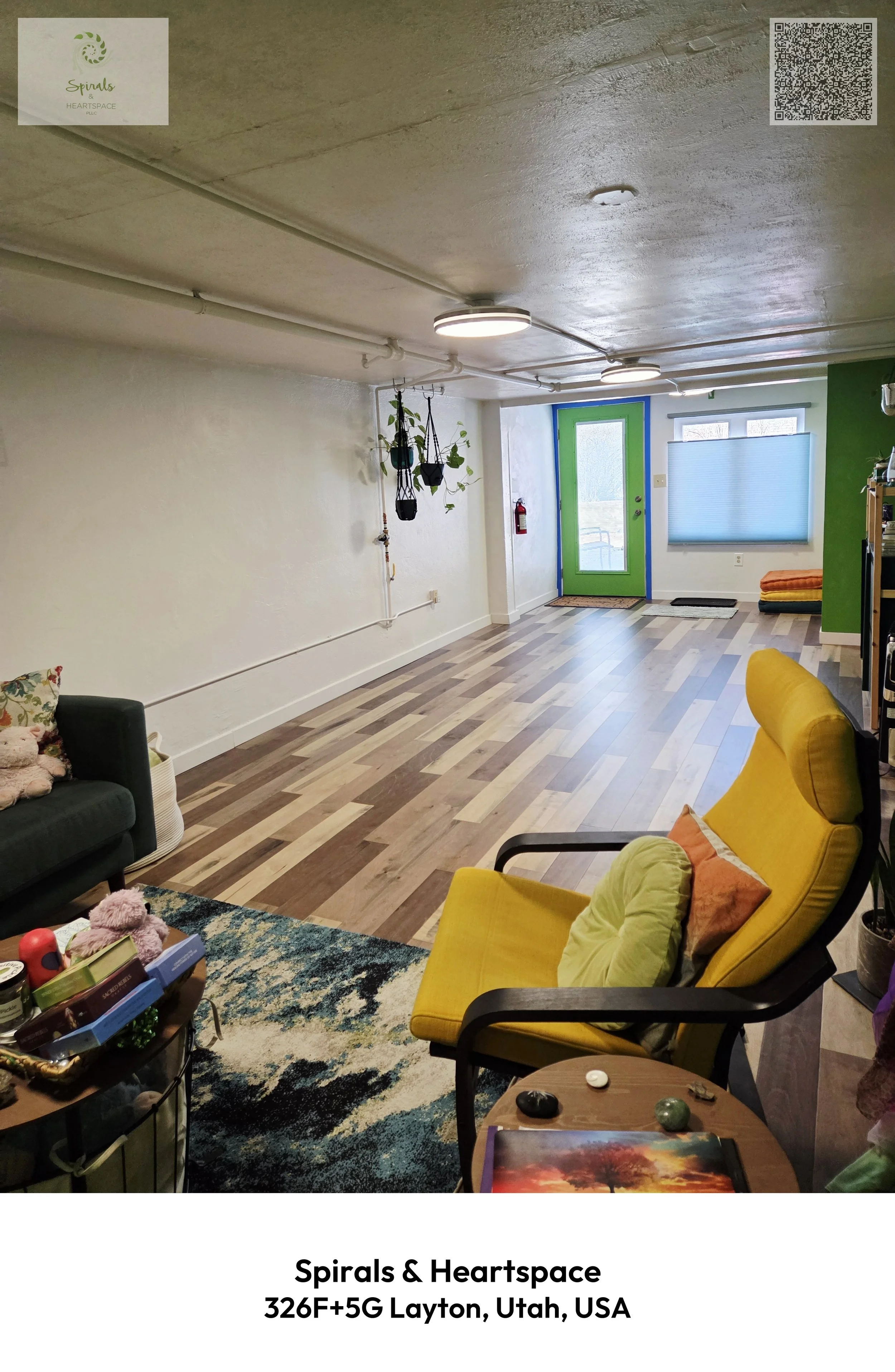
Spirals & Heartspace
Name: Spirals & Heartspace
Address: 534 W Gentile St, Layton, UT 84041
Phone: (385) 301-5252
Website: https://spiralsandheartspacehealing.com/
Hours:
Sunday: Closed
Monday: 9:30 AM – 7:00 PM
Tuesday: 9:30 AM – 7:00 PM
Wednesday: 9:30 AM – 7:00 PM
Thursday: 9:30 AM – 7:00 PM
Friday: 9:30 AM – 7:00 PM
Saturday: Closed
Open-location code / plus code: 326F+5G Layton, Utah, USA
Coordinates: 41.0604503, -111.9762128
Map/listing URL: https://www.google.com/maps/place/Spirals+%26+Heartspace/@41.0604503,-111.9762128,766m/data=!3m2!1e3!4b1!4m6!3m5!1s0x875303311f1d4d1b:0xc6859e5e3fceafe2!8m2!3d41.0604503!4d-111.9762128!16s%2Fg%2F11x781dbvb
Embed iframe:
Socials:
Instagram: https://www.instagram.com/spiralsheartspace/
LinkedIn: https://www.linkedin.com/company/spirals-and-heartspace-pllc
TikTok: https://www.tiktok.com/@spiralsheartspace
X: https://x.com/SpiralsHea61786
YouTube: https://www.youtube.com/@SpiralsHeartspace
The practice is led by Ande Welling, a licensed clinical mental health counselor with training in dance/movement therapy, somatic work, EMDR, trauma care, relational neuroscience, and embodied attachment.
Listed services include therapy, coaching, consultation, authentic movement, trauma therapy, somatic therapy, grief counseling, movement therapy, and attachment therapy.
The practice serves adults who want a deeper body-aware approach to trauma, anxiety, depression, grief, burnout, self-abandonment, family patterns, and relationship wounds.
Spirals & Heartspace offers both in-person sessions in Layton and online therapy for clients in Utah.
The practice is locally positioned for clients in Layton, Kaysville, Farmington, Syracuse, Clearfield, Clinton, Roy, Ogden, Bountiful, Davis County, and nearby northern Utah communities.
The office is listed at 534 W Gentile St in Layton, with public listing hours Monday through Friday from 9:30 AM to 7:00 PM.
Prospective clients can call (385) 301-5252 or visit https://spiralsandheartspacehealing.com/ to ask about consultation options, session fit, and scheduling.
The public map listing for Spirals & Heartspace can help clients verify the Gentile Street office before planning an in-person appointment.
Popular Questions About Spirals & Heartspace
What is Spirals & Heartspace?
Spirals & Heartspace is a Layton, Utah psychotherapy and coaching practice offering somatic, trauma-focused, expressive arts, movement-based, and attachment-informed support for adults.
Who is the therapist at Spirals & Heartspace?
The official site identifies Ande Welling as the therapist, coach, movement facilitator, and guide behind Spirals & Heartspace. Listed credentials include LCMHC, BC-DMT, NCC, GL-CMA, BSE, EMDR Trained, and CCTP-II.
Where is Spirals & Heartspace located?
The matching public listing and LinkedIn profile list the address as 534 W Gentile St, Layton, UT 84041.
Does Spirals & Heartspace offer online therapy?
Yes. The official FAQ states that therapy is available in person or through a HIPAA-compliant telehealth platform for clients who live in Utah.
What services does Spirals & Heartspace provide?
Listed services include therapy, coaching, consultation, authentic movement, trauma therapy, somatic therapy, grief counseling, movement therapy, and attachment therapy.
What makes somatic therapy different from traditional talk therapy?
The official Layton page explains that somatic therapy works with body sensations, movement, and physical experience because trauma and emotional patterns can be held in the nervous system, not only in thoughts.
Do clients need dance experience for movement therapy?
No. The official Layton FAQ says no dance training or special physical ability is required, and that movement therapy uses a client’s natural capacity for movement to access emotions and process experiences.
Does Spirals & Heartspace accept insurance?
The official FAQ says the practice does not take insurance directly, but may provide superbills or bill for out-of-network benefits when applicable. Clients should confirm current reimbursement options directly before scheduling.
What are Spirals & Heartspace’s listed hours?
The matching public listing shows Monday through Friday from 9:30 AM to 7:00 PM, with Saturday and Sunday closed. Appointment availability should be confirmed directly.
How can I contact Spirals & Heartspace?
Call (385) 301-5252, visit https://spiralsandheartspacehealing.com/, or use the listed social profiles: https://www.instagram.com/spiralsheartspace/, https://www.linkedin.com/company/spirals-and-heartspace-pllc, https://www.tiktok.com/@spiralsheartspace, https://x.com/SpiralsHea61786, and https://www.youtube.com/@SpiralsHeartspace.
Landmarks Near Layton, UT
Spirals & Heartspace is located on West Gentile Street in Layton, Utah, with in-person therapy available locally and online therapy available for Utah residents. Clients near these landmarks can call (385) 301-5252 or visit https://spiralsandheartspacehealing.com/ to ask about somatic therapy, trauma therapy, movement therapy, grief counseling, attachment therapy, and consultation options.
- 534 W Gentile St — The listed office address for Spirals & Heartspace; clients can use the map listing to verify the office before visiting.
- West Gentile Street — The local street connected with the practice’s Layton office location.
- Downtown Layton — A practical local reference point for clients navigating central Layton.
- Layton Hills Mall — A major Layton shopping landmark and useful orientation point for clients traveling through the city.
- Interstate 15 near Layton — A major northern Utah route that helps clients reach Layton from nearby Davis County communities.
- Layton FrontRunner Station — A transit landmark for clients traveling by commuter rail through Davis County.
- Ellison Park — A local park and community landmark in Layton.
- Great Salt Lake Shorelands Preserve — A major natural landmark west of Layton and a recognizable Davis County destination.
- Hill Air Force Base — A major regional landmark near Layton and Clearfield.
- Kaysville — A nearby Davis County city listed in the practice’s surrounding service area.
- Farmington — A nearby Davis County community included in the broader local service-area language.
- Ogden — A nearby northern Utah city; clients can ask whether online Utah therapy or in-person Layton sessions are the best fit.