Attachment Therapy for Healing From Insecure Attachment Styles
Attachment wounds rarely announce themselves in obvious ways. More often, they show up in the patterns people repeat without wanting to. A person longs for closeness, then panics when someone gets too near. Another stays in one-sided relationships because distance feels safer than real dependence. Someone else looks calm and capable on the surface, yet privately feels impossible to soothe without constant reassurance. These are not character flaws. They are Check out here adaptations, often intelligent ones, shaped in early relationships where safety, comfort, and connection were inconsistent, intrusive, unavailable, or confusing.
Attachment therapy is designed to work with those patterns at their root. Rather than treating symptoms in isolation, it helps a person understand how their nervous system learned to manage closeness, separation, trust, need, and vulnerability. That is why this work can be so powerful for people living with anxious, avoidant, disorganized, or otherwise insecure attachment styles. The goal is not to assign blame to parents or to reduce adult struggles to childhood shorthand. The goal is to make sense of the relational blueprint a person carries, then help revise it through experience.
In practice, this kind of healing is often slower and more layered than people expect. Insight matters, but insight alone rarely changes attachment. Most people with insecure attachment already know their patterns at least intellectually. What they need is help creating new emotional and bodily experiences of safety, boundaries, repair, and mutuality. That is where attachment therapy becomes more than a conversation. Depending on the person, it may overlap with trauma therapy, somatic therapy, grief counseling, or movement therapy, because attachment injuries are rarely only cognitive. They live in the body, in memory, in expectation, and in the split second before a person reaches for someone or pulls away.
What insecure attachment actually looks like in adult life
The language of attachment has become common enough that many people now label themselves after reading a few social media posts. Sometimes they get it right. Often they oversimplify. In clinical work, insecure attachment is less about a neat category and more about recurring strategies for managing relationship stress.
An anxiously attached person may monitor tone, response time, and subtle shifts in affection with exhausting precision. They may feel intense connection quickly and experience ordinary ambiguity as a threat. If a partner needs space, it can register not as a neutral fact but as danger. Their system often learned early that connection was inconsistent, so it now works overtime to preserve closeness.
An avoidantly attached person may value independence to such a degree that dependence feels humiliating or unsafe. They may minimize needs, intellectualize conflict, or shut down when emotional demands rise. These individuals are often misread as cold. In reality, many feel deeply, but closeness activates old expectations of engulfment, criticism, disappointment, or loss of control.
Disorganized attachment can be the most painful and confusing of the patterns. A person wants intimacy and fears it at the same time. They may move toward someone and then abruptly detach, become suspicious, or act in ways that destabilize the connection they need. This pattern is common in people whose early caregivers were both a source of comfort and a source of fear, or in those with histories of relational trauma.
These patterns affect more than romance. They shape friendships, workplace dynamics, parenting, sexual relationships, conflict style, and even how someone receives help from a therapist. One person misses sessions after feeling emotionally seen. Another becomes highly compliant in therapy but never risks disagreement. Another shares intense pain, then leaves each session feeling exposed and ashamed. All of this is attachment in motion.
Why attachment wounds are so hard to think your way out of
People often come to therapy after years of self-help, journaling, podcasts, and hard-earned insight. They can describe their attachment style in detail. They know where it came from. They can even predict what they will do in the next conflict. Yet when the real moment arrives, they still text too much, shut down, pick a fight, disappear, cling, numb out, or choose the familiar unavailable person.
That gap is not a failure of willpower. Attachment patterns are procedural, not just reflective. They are built through repeated experiences, especially early ones, and stored not only as beliefs but as bodily expectations. A person does not merely think, “People leave.” Their chest tightens before a goodbye. Their stomach drops when a message goes unanswered. Their muscles brace when someone sounds disappointed. Their mind fills in danger before they have time to evaluate what is actually happening.
This is why attachment therapy often sits alongside trauma therapy. Many insecure attachment patterns are trauma adaptations, even when someone would not use the word trauma for their childhood. Trauma does not always mean a single catastrophic event. It can also mean chronic misattunement, emotional unpredictability, role reversal, neglect, shaming, or repeated experiences of not being comforted when distressed. When those experiences happen in formative relationships, the body learns survival strategies that can outlast the original environment by decades.
What attachment therapy is trying to change
At its best, attachment therapy helps a person build a more secure internal model of relationship. That phrase can sound abstract, but the changes are concrete. A person gradually learns that need does not equal weakness, distance does not always equal abandonment, conflict does not always equal rupture, and closeness does not have to erase autonomy.
This shift happens through the therapeutic relationship itself, but not in a simplistic way. The therapist is not a replacement parent. The work is not about dependence for its own sake. Instead, the therapist offers a relationship that is boundaried, consistent, reflective, and responsive enough to support new learning. Sessions start and end on time. Misunderstandings get explored rather than ignored. Strong feelings do not automatically lead to punishment, withdrawal, or enmeshment. Over time, this kind of contact becomes corrective.
In a useful course of attachment therapy, the client begins to notice old predictions and test new ones. They might expect rejection after expressing anger, then discover that disagreement can be survived. They might anticipate engulfment after asking for support, then experience help that does not become control. They might feel ashamed for needing reassurance, then slowly learn to ask directly instead of protesting indirectly.
The work is often subtle. Healing may first show up as a pause before reacting, an ability to stay present during discomfort, or a clearer sense of what belongs to the past and what belongs to the present. Those shifts can look small from the outside. In real life, they change everything.
The role of the body in attachment healing
Attachment is embodied. Anyone who has worked closely with insecure attachment sees this quickly. A client says they trust their partner, but their shoulders are up near their ears when the partner travels. Another says they do not need anyone, yet their jaw clenches every time they talk about receiving care. A third feels “fine” after a breakup but cannot sleep, cannot eat normally, and startles at every notification.
This is where somatic therapy can be especially valuable. Somatic work pays attention to the physical expressions of attachment distress and regulation. Instead of asking only, “What do you think when this happens?” it also asks, “What do you feel in your chest, throat, belly, breath, skin, posture?” Those details matter because they reveal how the nervous system organizes around contact and threat.
Many people with insecure attachment try to override the body with insight. That strategy usually works until the stakes rise. In session, a therapist might help someone track activation as they talk about setting a boundary, missing a partner, or recalling a painful memory. The goal is not dramatic catharsis. It is increased capacity. Can the person feel longing without collapsing into panic? Can they feel anger without dissociating? Can they notice the impulse to shut down and stay present just a little longer?
Movement therapy can support this process as well, especially for clients who have learned to disconnect from sensation. Relational patterns are often visible in movement long before they are visible in language. A client may physically lean away while describing a desire for closeness. Another may hold themselves rigidly still whenever dependence comes up. Guided movement, posture work, or simple embodied experiments can bring implicit patterns into awareness in a nonverbal, immediate way.
This does not mean every attachment issue requires body-based methods. Some clients do excellent work through talk therapy alone. But when the body carries the burden of old attachment fear, integrating somatic approaches often makes the work deeper and more durable.
How grief sits inside insecure attachment
One of the most overlooked aspects of attachment therapy is grief. People with insecure attachment are not only dealing with present-day patterns. They are also grieving what they did not consistently receive. Reliable comfort. Emotional protection. Delight. Permission to need. A caregiver who could be stronger than the child’s distress instead of threatened by it.
That grief can surface in unexpected ways. A client may become angry when therapy starts to help, because improvement sharpens awareness of what was missing. Another may feel disloyal acknowledging harm done by a loving but limited parent. Someone may cling to idealized narratives about childhood because the alternative opens painful losses that have never been named.
Grief counseling can be an essential part of attachment healing in these cases. Not every attachment wound needs a formal grief framework, but many people need support mourning both what happened and what never happened. They may need to grieve years spent choosing emotionally unavailable partners. They may need to grieve the fantasy that one more conversation with a parent will finally produce the attunement they have always wanted. They may need to grieve identities built around overfunctioning, self-reliance, or being the easy one.
Without grief, attachment work can become overly strategic, all skills and no sorrow. Skills matter, but grief makes room for truth. And truth tends to soften the compulsive repetition of old patterns.
What treatment can look like over time
Attachment therapy is not a single technique. It is a lens that shapes how therapy is conducted. Depending on the therapist’s training, it may include psychodynamic work, emotionally focused approaches, parts work, trauma therapy methods, somatic interventions, or structured relational exercises. Good treatment is tailored, because attachment wounds do not all organize the same way.
Early work often focuses on safety and pacing. This stage matters more than many clients realize. A therapist who pushes vulnerability too quickly can reproduce the very dynamics the client is trying to heal. Some people need months just to learn what internal safety feels like. Others need help identifying needs before they can communicate them. A person who has spent decades detaching from emotion may not benefit from being urged to “open up” in week three.
As therapy deepens, patterns begin to show up in the room. This is not a problem. It is the work. If a client fears being too much, they may downplay pain. If they expect criticism, they may hear neutral reflections as disapproval. If they equate closeness with loss of autonomy, they may feel trapped by the therapist’s consistency. These moments create opportunities for new relational experiences, provided the therapist can recognize and work with them skillfully.
Later phases often involve translating insight into lived relationship changes. That may mean dating differently, ending exploitative friendships, tolerating healthy dependence, repairing with a partner, or parenting in a less reactive way. Some clients discover that the hardest part of healing is not identifying dysfunction but receiving healthy love without sabotaging it.
A few signs that attachment therapy is moving in the right direction tend to appear across different cases:
- You notice your triggers sooner, before they fully take over.
- You can name needs and limits more directly.
- You recover faster after conflict, distance, or disappointment.
- You choose relationships with greater consistency and less chaos.
- You feel more like yourself in closeness, not less.
These shifts usually unfold unevenly. People often improve in one domain while still struggling in another. A person may become more secure in friendship before romance. They may communicate better with a partner yet still freeze with authority figures. Progress is rarely linear, and that is normal.
Common misconceptions that get in the way
Attachment therapy is sometimes misunderstood as endless analysis of childhood. Poorly done therapy can drift that way. Effective work connects the past to the present with precision. It asks not only what happened, but how those experiences are still shaping expectation, sensation, behavior, and choice now.
Another misconception is that secure attachment means becoming endlessly open, available, and relational. It does not. Security includes boundaries, discernment, and the right to step back from unsafe people. Some clients fear that healing will make them soft or dependent. In my experience, it tends to make people clearer. They can differentiate between healthy vulnerability and overexposure, between intimacy and enmeshment, between solitude and defensive withdrawal.
There is also the belief that attachment issues can be fixed once a person finds the “right” partner. A stable relationship can absolutely support healing, but it does not automatically reorganize deeply rooted patterns. In fact, healthy love often activates old fear precisely because it is unfamiliar. People are sometimes surprised to find that they felt calmer in chaotic relationships than in reciprocal ones. Chaos matched the old map. Stability required new learning.
When attachment therapy needs more than talk
There are cases where attachment-focused conversation alone is not enough. If a person has severe dissociation, complex trauma, panic, self-harm, addiction, or a history of abusive relationships, treatment often needs a broader frame. Here, trauma therapy is not optional window dressing. It may be the foundation that makes attachment work possible.
For example, someone with disorganized attachment and a history of interpersonal violence may need careful stabilization before directly exploring relational longing. Another person whose body goes into collapse during conflict may benefit from somatic therapy to build regulation skills before processing painful memories. A grieving client whose attachment injuries were intensified by bereavement may need dedicated grief counseling to untangle loss from abandonment terror.
In some practices, movement therapy becomes useful for clients who cannot access emotion verbally or who chronically leave their bodies under stress. Structured movement, orientation exercises, breath pacing, and posture awareness can help restore a sense of agency and presence. This is especially important for clients whose attachment histories involved powerlessness.
No single modality is best for everyone. What matters is fit. Good therapists make careful judgments about timing, pacing, and method rather than forcing every client into the same model.
Choosing a therapist for attachment work
Finding the right therapist matters more here than people sometimes expect. Because the therapy relationship is part of the treatment, fit is not secondary. A brilliant therapist who feels emotionally inaccessible to a particular client may not be the best choice, even if they have impressive credentials.
When people are screening therapists for attachment work, I usually suggest listening for a few things:
- They can explain attachment clearly without reducing you to a label.
- They are comfortable discussing trauma, the nervous system, and relationship patterns together.
- They value pacing and do not push emotional exposure as proof of progress.
- They can name how repair works if there is a misunderstanding in therapy.
- They welcome questions about their approach, boundaries, and experience.
A practical point matters too. Attachment therapy often works best with consistency. Weekly sessions are common, at least for a period of time, because the work depends on continuity. Meeting once a month may support maintenance, but it is often too intermittent for deep relational change, especially early on.
What healing often feels like from the inside
People expect healing to feel liberating right away. Sometimes it does. More often, it feels disorienting before it feels free. Old strategies existed for a reason. They protected something. When those strategies begin to loosen, a person can feel unusually exposed. The anxiously attached client who stops overpursuing may initially feel helpless. The avoidant client who starts naming needs may feel embarrassed or weak. The disorganized client who stays present during intimacy may feel both relief and terror in the same hour.
That phase does not mean therapy is failing. It often means something real is changing. New attachment experiences challenge old predictions, and the nervous system needs time to catch up. One client once described it as learning to walk on ground that did not move. Beautiful, but strange. Another said secure connection felt quiet enough that she kept waiting for the hidden problem. That is a common moment in this work. Peace can feel suspicious when chaos has been normal.
Over time, the strangeness tends to settle. People still get triggered, but not as absolutely. They still feel hurt, but not annihilated. They still need reassurance at times, but they are less ruled by the need. They can sort present reality from old fear more quickly. They become more selective, less performative, and far less willing to confuse inconsistency with chemistry.
The deeper promise of attachment therapy
The real promise of attachment therapy is not that you will become perfectly secure or immune to relational pain. No one reaches that state. Human beings remain vulnerable to loss, disappointment, misunderstanding, and longing. The promise is that those experiences no longer have to run through an old template that distorts everything.
Healing insecure attachment means you can stay in contact with yourself while being in contact with others. You can ask, receive, refuse, grieve, repair, and separate with more coherence. You can recognize when a relationship is asking for courage and when it is repeating harm. You can stop organizing your life around the prevention of abandonment, engulfment, or chaos.
For many people, that shift is life-changing. Not because it makes relationships simple, but because it makes them real. And real, for someone who has lived inside insecure attachment for years, is often far more nourishing than intense.
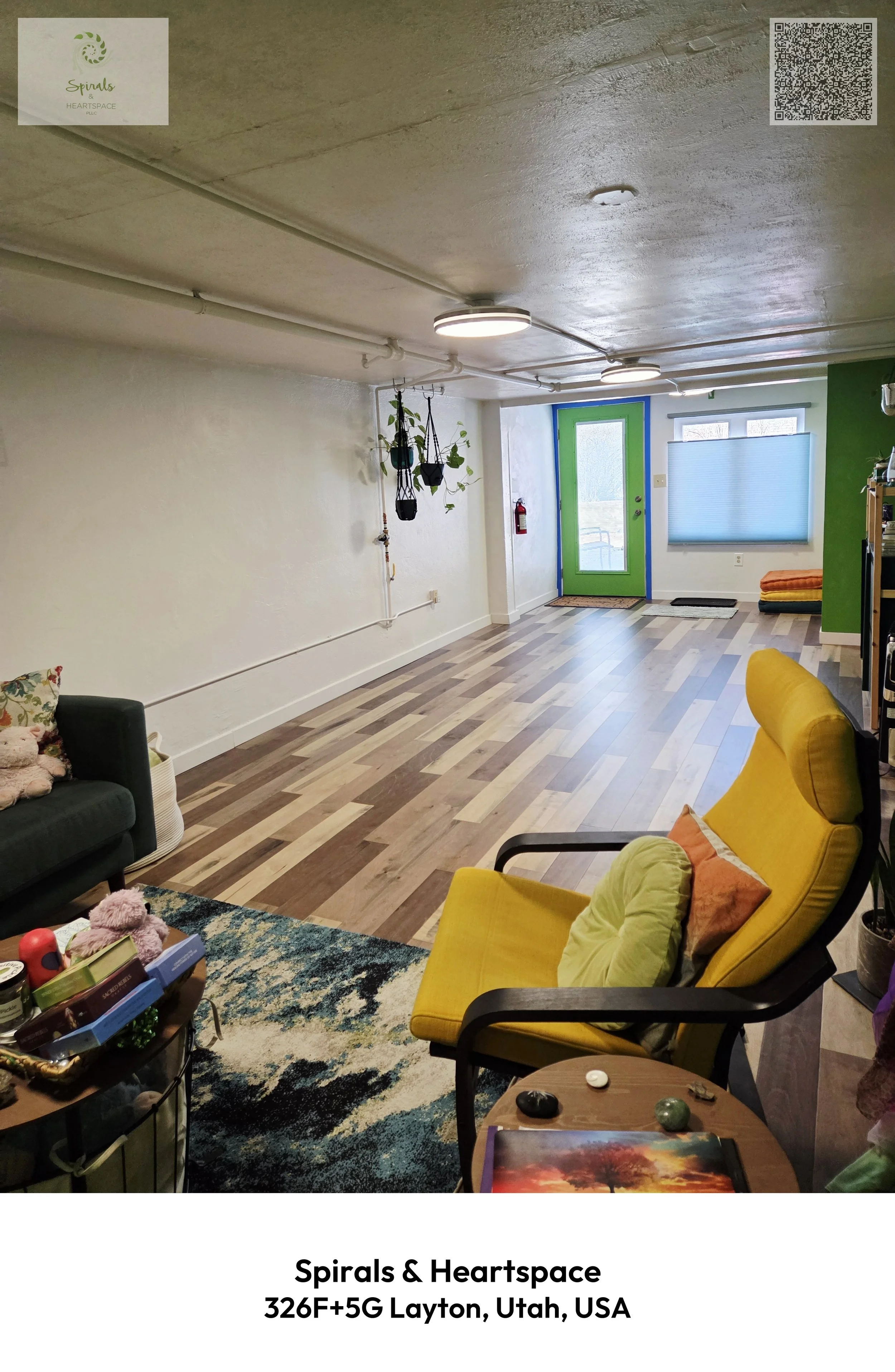
Spirals & Heartspace
Name: Spirals & Heartspace
Address: 534 W Gentile St, Layton, UT 84041
Phone: (385) 301-5252
Website: https://spiralsandheartspacehealing.com/
Hours:
Sunday: Closed
Monday: 9:30 AM – 7:00 PM
Tuesday: 9:30 AM – 7:00 PM
Wednesday: 9:30 AM – 7:00 PM
Thursday: 9:30 AM – 7:00 PM
Friday: 9:30 AM – 7:00 PM
Saturday: Closed
Open-location code / plus code: 326F+5G Layton, Utah, USA
Coordinates: 41.0604503, -111.9762128
Map/listing URL: https://www.google.com/maps/place/Spirals+%26+Heartspace/@41.0604503,-111.9762128,766m/data=!3m2!1e3!4b1!4m6!3m5!1s0x875303311f1d4d1b:0xc6859e5e3fceafe2!8m2!3d41.0604503!4d-111.9762128!16s%2Fg%2F11x781dbvb
Embed iframe:
Socials:
Instagram: https://www.instagram.com/spiralsheartspace/
LinkedIn: https://www.linkedin.com/company/spirals-and-heartspace-pllc
TikTok: https://www.tiktok.com/@spiralsheartspace
X: https://x.com/SpiralsHea61786
YouTube: https://www.youtube.com/@SpiralsHeartspace
The practice is led by Ande Welling, a licensed clinical mental health counselor with training in dance/movement therapy, somatic work, EMDR, trauma care, relational neuroscience, and embodied attachment.
Listed services include therapy, coaching, consultation, authentic movement, trauma therapy, somatic therapy, grief counseling, movement therapy, and attachment therapy.
The practice serves adults who want a deeper body-aware approach to trauma, anxiety, depression, grief, burnout, self-abandonment, family patterns, and relationship wounds.
Spirals & Heartspace offers both in-person sessions in Layton and online therapy for clients in Utah.
The practice is locally positioned for clients in Layton, Kaysville, Farmington, Syracuse, Clearfield, Clinton, Roy, Ogden, Bountiful, Davis County, and nearby northern Utah communities.
The office is listed at 534 W Gentile St in Layton, with public listing hours Monday through Friday from 9:30 AM to 7:00 PM.
Prospective clients can call (385) 301-5252 or visit https://spiralsandheartspacehealing.com/ to ask about consultation options, session fit, and scheduling.
The public map listing for Spirals & Heartspace can help clients verify the Gentile Street office before planning an in-person appointment.
Popular Questions About Spirals & Heartspace
What is Spirals & Heartspace?
Spirals & Heartspace is a Layton, Utah psychotherapy and coaching practice offering somatic, trauma-focused, expressive arts, movement-based, and attachment-informed support for adults.
Who is the therapist at Spirals & Heartspace?
The official site identifies Ande Welling as the therapist, coach, movement facilitator, and guide behind Spirals & Heartspace. Listed credentials include LCMHC, BC-DMT, NCC, GL-CMA, BSE, EMDR Trained, and CCTP-II.
Where is Spirals & Heartspace located?
The matching public listing and LinkedIn profile list the address as 534 W Gentile St, Layton, UT 84041.
Does Spirals & Heartspace offer online therapy?
Yes. The official FAQ states that therapy is available in person or through a HIPAA-compliant telehealth platform for clients who live in Utah.
What services does Spirals & Heartspace provide?
Listed services include therapy, coaching, consultation, authentic movement, trauma therapy, somatic therapy, grief counseling, movement therapy, and attachment therapy.
What makes somatic therapy different from traditional talk therapy?
The official Layton page explains that somatic therapy works with body sensations, movement, and physical experience because trauma and emotional patterns can be held in the nervous system, not only in thoughts.
Do clients need dance experience for movement therapy?
No. The official Layton FAQ says no dance training or special physical ability is required, and that movement therapy uses a client’s natural capacity for movement to access emotions and process experiences.
Does Spirals & Heartspace accept insurance?
The official FAQ says the practice does not take insurance directly, but may provide superbills or bill for out-of-network benefits when applicable. Clients should confirm current reimbursement options directly before scheduling.
What are Spirals & Heartspace’s listed hours?
The matching public listing shows Monday through Friday from 9:30 AM to 7:00 PM, with Saturday and Sunday closed. Appointment availability should be confirmed directly.
How can I contact Spirals & Heartspace?
Call (385) 301-5252, visit https://spiralsandheartspacehealing.com/, or use the listed social profiles: https://www.instagram.com/spiralsheartspace/, https://www.linkedin.com/company/spirals-and-heartspace-pllc, https://www.tiktok.com/@spiralsheartspace, https://x.com/SpiralsHea61786, and https://www.youtube.com/@SpiralsHeartspace.
Landmarks Near Layton, UT
Spirals & Heartspace is located on West Gentile Street in Layton, Utah, with in-person therapy available locally and online therapy available for Utah residents. Clients near these landmarks can call (385) 301-5252 or visit https://spiralsandheartspacehealing.com/ to ask about somatic therapy, trauma therapy, movement therapy, grief counseling, attachment therapy, and consultation options.
- 534 W Gentile St — The listed office address for Spirals & Heartspace; clients can use the map listing to verify the office before visiting.
- West Gentile Street — The local street connected with the practice’s Layton office location.
- Downtown Layton — A practical local reference point for clients navigating central Layton.
- Layton Hills Mall — A major Layton shopping landmark and useful orientation point for clients traveling through the city.
- Interstate 15 near Layton — A major northern Utah route that helps clients reach Layton from nearby Davis County communities.
- Layton FrontRunner Station — A transit landmark for clients traveling by commuter rail through Davis County.
- Ellison Park — A local park and community landmark in Layton.
- Great Salt Lake Shorelands Preserve — A major natural landmark west of Layton and a recognizable Davis County destination.
- Hill Air Force Base — A major regional landmark near Layton and Clearfield.
- Kaysville — A nearby Davis County city listed in the practice’s surrounding service area.
- Farmington — A nearby Davis County community included in the broader local service-area language.
- Ogden — A nearby northern Utah city; clients can ask whether online Utah therapy or in-person Layton sessions are the best fit.