Grief Counseling for Life Transitions That Feel Like Loss
Not all grief begins with a funeral.
Some forms of loss arrive without ceremony, casseroles, or bereavement leave. A marriage ends, but both people are still alive. A body changes after illness, childbirth, injury, or age, and the person looking back from the mirror is familiar yet altered. A child leaves home. A career built over twenty years disappears after a layoff, a move, or burnout. An adult child cuts off contact. A family relocates for a good opportunity and still feels strangely unmoored for months. On paper, some of these changes even look positive. Inside, they can feel like a death.
This is often where people become confused about their own suffering. They tell themselves they should be grateful, practical, adaptable. They may think grief counseling is only for bereavement, or that their distress is too ambiguous to count. Yet many life transitions involve the same emotional tasks that follow more recognized losses. Something meaningful has ended. An identity has been disrupted. The future has to be imagined again.
In clinical practice, this kind of grief often hides behind other labels. People come in saying they are anxious, numb, irritable, exhausted, or “stuck.” They report trouble sleeping, loss of appetite, difficulty concentrating, low motivation, or a short fuse with people they love. Sometimes the presenting issue is panic, conflict in a relationship, or a sense that they no longer recognize themselves. Grief sits underneath, not always obvious at first, but shaping the whole emotional landscape.
When a transition becomes a loss
A transition is child attachment therapy any significant shift in circumstances, roles, or identity. A loss is what happens when that shift takes away something attached to meaning, belonging, safety, or continuity. Those two experiences often overlap.
Consider retirement. One person may welcome it and move into a satisfying new chapter. Another may feel stripped of structure, competence, community, and purpose, especially if work organized daily life for decades. The same event, two very different nervous system responses. Or think about becoming a parent. The arrival of a wanted child can coexist with grief for freedom, spontaneity, bodily autonomy, sexual identity, or the version of the couple relationship that existed before. These feelings do not cancel love. They simply reveal that growth and grief frequently travel together.
Losses tied to life transitions are often called disenfranchised or unrecognized grief. They are harder to name because the culture around them is thin. There may be no ritual, no clear beginning, no settled narrative. Divorce is a clean legal category, but grief after divorce is rarely clean. People grieve the partner they had, the partner they hoped for, the years invested, the family structure imagined, and the future now gone. A person leaving a faith community may grieve certainty, belonging, moral language, music, holidays, and the self that once fit there. Someone diagnosed with a chronic condition may grieve not only health, but assumptions about reliability, independence, and time.
What makes these losses particularly destabilizing is that they often disturb attachment. Human beings organize around bonds, routines, and familiar roles. When those are disrupted, the mind looks for reasons and the body looks for safety. That is why life transitions can trigger old wounds. A breakup at forty-five may stir attachment injuries from childhood abandonment. A move across the country may awaken earlier experiences of dislocation. Job loss can activate shame rooted in a family system where worth was tied to performance. This is one reason attachment therapy can be such a useful frame. It helps people understand that they are not overreacting. They are reacting from a history.
The body grieves before language catches up
Many people expect grief to look like sadness. Often it does not, at least not at first. It may arrive as tension in the chest, nausea before work, shallow breathing, headaches, agitation, insomnia, or a feeling of moving through fog. The body usually notices the rupture before the mind has made sense of it.
This matters in counseling because insight alone does not always shift the experience. A client may understand perfectly well why a move was necessary or why a relationship had to end, yet still feel panicked every evening or heavy every morning. The nervous system has not caught up to the story.
That is where somatic therapy can be especially effective. Somatic work pays attention to the body’s signals and patterns rather than treating physical experience as background noise. In sessions, this may involve noticing posture, breath, muscle bracing, impulses to pull away or move closer, or the places where emotion gets interrupted. A person grieving a major life change often alternates between overwhelm and numbness. Somatic therapy helps build enough internal steadiness to feel what is there without getting flooded by it.
Trauma therapy also has an important place here, especially when the transition itself was sudden, coercive, or layered onto earlier adversity. A miscarriage, a frightening medical diagnosis, an abrupt firing, immigration under pressure, or a breakup that involved betrayal can all carry traumatic elements. In these situations, grief and trauma are intertwined. The person is not only mourning what was lost, they are also trying to metabolize shock, helplessness, fear, or violation. Good treatment makes room for both. If a therapist moves too quickly into meaning-making without addressing the nervous system’s alarm state, the work can feel thin or even invalidating.
Movement therapy can be another powerful option, particularly for people who have trouble finding words. Transition often creates energy that has nowhere to go. A person feels restless but frozen, activated but flat. Intentional movement, whether through guided therapeutic exercises, walking, stretching, rhythmic practices, or more formal movement therapy, can support emotional processing in a way conversation alone sometimes cannot. The goal is not performance. It is regulation, expression, and reconnection with a body that may feel foreign or unreliable after loss.
Why people minimize this kind of grief
The most common barrier is comparison. People tell themselves that because no one died, they should be fine. They look at someone else’s Grief counseling tragedy and assume their own pain does not qualify. This tends to backfire. Minimized grief does not disappear. It usually goes underground and returns as anxiety, depression, compulsive busyness, emotional withdrawal, or physical symptoms.
Another barrier is mixed emotion. People can feel relief and grief at the same time, and that combination often creates shame. Someone leaving a destructive marriage may feel lighter and lonelier in the same week. A person who finally gets a long-awaited promotion may still grieve the loss of time with family or the version of life that felt simpler. Parents often grieve children growing up while feeling proud of their independence. The mind tends to demand coherence, but human emotion is not tidy. Ambivalence is not a sign that something is wrong. It is often evidence that the transition matters.
Some people were never taught to recognize grief unless it looked dramatic. In families where feelings were managed through silence, humor, productivity, or criticism, there may be little permission to mourn subtler losses. Others learned early that need itself was unsafe. In those cases, grief counseling often begins with a basic but profound task: helping the person notice what mattered enough to hurt.
What grief counseling can actually do
Grief counseling is not about talking someone out of pain. It is not a set of platitudes about acceptance, gratitude, or closure. In good practice, it helps a person make contact with reality at a pace the nervous system can tolerate, while preserving dignity and complexity.
A useful grief process often includes several things happening at once. It names the loss accurately. It gives language to emotions that have been blurred together. It helps the person distinguish what has ended from what remains. It supports the body through stress responses that can make ordinary functioning much harder. It also creates room for identity reconstruction, which is one of the least discussed and most demanding aspects of major transition.
After divorce, for example, one client may need to grieve the marriage and also learn what evenings look like alone in a quiet apartment. After an infertility diagnosis, another may need support mourning a hoped-for future while also navigating friendships, family comments, and a body that now feels like a source of betrayal. A person in midlife after a parent enters memory care may find themselves grieving the parent who is still living, the reversal of roles, and the sudden awareness of their own aging. These are not quick problems to solve. They are changes to absorb.
In practice, grief counseling can involve careful conversation, emotional processing, relational repair, nervous system work, and daily-life adaptation. Depending on the person, trauma therapy may be central. For someone whose grief is strongly embodied, somatic therapy may be the doorway in. If the transition destabilizes close relationships or activates abandonment fears, attachment therapy may help make sense of the intensity. The best therapy is not trendy or rigid. It is responsive.
Signs that support may be useful
Not every hard transition requires formal counseling. Many people move through loss with support from friends, family, faith communities, or time. Still, there are patterns that suggest extra help would be wise.
- The transition happened months ago and daily functioning is still sharply impaired.
- Sleep, appetite, concentration, or work capacity have changed in a sustained way.
- The person feels persistently numb, panicked, ashamed, or detached from others.
- Old trauma, compulsive behavior, or relationship conflict has intensified since the change.
- There is a sense of being unable to imagine a future, even in small practical terms.
These signs do not mean someone is failing at grief. They usually mean the system is carrying more than it can process alone.
What sessions may look like in real life
People often picture therapy as a neat weekly conversation where insights arrive on schedule. Grief work rarely behaves that way. Some sessions are raw and specific. A client might cry describing the first holiday after separation, the unopened baby clothes after a loss, or the feeling of packing a parent’s house. Other sessions are quieter and more practical. They may focus on sleep routines, eating regularly, handling paperwork, setting boundaries with family, or creating enough structure to get through the week.
One of the most useful shifts in grief counseling is moving from self-judgment to observation. Instead of “I should be over this by now,” the therapist might help the client notice that mornings are hardest, anniversaries trigger a body response, or social media intensifies comparison after a life change. This sounds simple, but it changes the posture from failure to information. Once patterns are visible, they can be worked with.
A therapist may also help differentiate grief from depression, anxiety, burnout, or trauma, while recognizing that they often overlap. A person who cannot stop crying after a move may not be clinically depressed, but they may still need support. Another who feels only numbness after a breakup may not be “fine,” but dissociated. Someone who seems highly functional after a job loss may be running on survival energy that collapses later. Good clinical judgment matters here. Labels should clarify, not flatten.
There is also a relational aspect. Many people going through major transitions feel profoundly alone, even when others are around. Friends may become impatient. Family may rush solutions. Partners may not understand the scale of the internal change. A therapeutic relationship, especially one informed by attachment therapy, can offer a stable place where the person does not have to edit, minimize, or perform recovery. That steadiness is not the entire treatment, but it is often one of the conditions that makes healing possible.
The question of timing
People often ask when grief counseling should start. There is no universal answer. Some seek help immediately after a rupture because the intensity is obvious. Others function for a while and then fall apart six months later, once practical demands settle and emotional reality catches up. Delayed grief is common, especially for caregivers, high performers, parents of young children, and anyone who had to stay in problem-solving mode during the transition.
There is also no fixed timeline for completion. Cultural expectations are often unrealistically short. A major loss tied to identity can reverberate for a year or more, sometimes much longer in waves. The goal is not to erase grief or meet an imagined deadline. It is to reduce suffering, restore functioning, deepen meaning, and help the person carry the loss without being dominated by it.
This matters for people who worry they are regressing when pain resurfaces. The first birthday after divorce, the season when a deceased or estranged parent used to visit, the back-to-school period after a child leaves for college, the work conference you used to attend before a career ended, all of these can reopen grief. That does not mean therapy failed. It means memory, body, and meaning are linked.
Rebuilding life without pretending nothing changed
There is a version of resilience that sounds admirable but is emotionally costly. It says: adapt fast, stay positive, keep moving. For some people, that strategy works in the short term. Over time, though, relentless forward motion can become another form of avoidance. Real adaptation usually asks for something slower and less glamorous. It asks a person to let the old chapter be real, even while building the next one.
That rebuilding often happens through ordinary acts. Cooking for one after years of family dinners. Learning the route to a new workplace. Buying clothes that fit a changed body. Taking down photographs that hurt too much, then later deciding which ones still belong. Introducing oneself without the old role attached. Making a friend in a new city. Saying no to an event that will be too painful this year. None of these acts are trivial. They are how the nervous system learns that life continues, though not unchanged.
When counseling is going well, people do not simply “move on.” They become more able to move with. They can speak about what was lost without collapsing every time. They can notice the body’s cues earlier. They can make room for joy without feeling disloyal to the past. They can imagine a future that does not deny the break in the story.
What helps outside the therapy room
Support between sessions matters, especially because grief is lived in kitchens, cars, workplaces, and bedrooms, not only in offices. The most effective practices are usually small and repeatable rather than dramatic.
- Keep one or two daily anchors, such as a morning walk, regular meals, or a predictable bedtime.
- Reduce avoidable overload during peak stress periods, including major anniversaries and early weeks after the change.
- Name the loss in concrete language, privately or with trusted people, instead of using only vague terms like “stress.”
- Choose forms of movement that regulate rather than punish, such as walking, stretching, yoga, dancing, or guided movement therapy.
- Limit contact with people who rush, minimize, or moralize your grief.
There is no single right ritual, but rituals do help. Some people write letters they never send. Others mark endings by changing a room, taking a solo trip, planting something, or creating a yearly practice on an anniversary date. What matters is not the performance of healing. It is the acknowledgment that something significant happened.
A final clinical truth worth remembering
The pain of transition is not always a problem to eliminate. Often it is evidence of attachment, investment, love, effort, hope, identity, or belonging. People grieve because something mattered.
That does not mean suffering should be romanticized. Persistent despair, panic, trauma symptoms, or emotional shutdown deserve real care. But it does mean there is dignity in this kind of grief, even when the surrounding world does not recognize it. A person mourning a lost marriage, a changed body, an estranged child, a homeland, a vocation, or a future they once counted on is not being dramatic. They are responding to rupture.
Grief counseling offers a place where that response can be met accurately. With the right support, whether through grief counseling, trauma therapy, somatic therapy, movement therapy, attachment therapy, or an integrated approach, people can learn to bear what changed without losing themselves entirely. The life ahead may not resemble the one that was planned. That is often the hardest truth in the room. It is also where new shape begins.
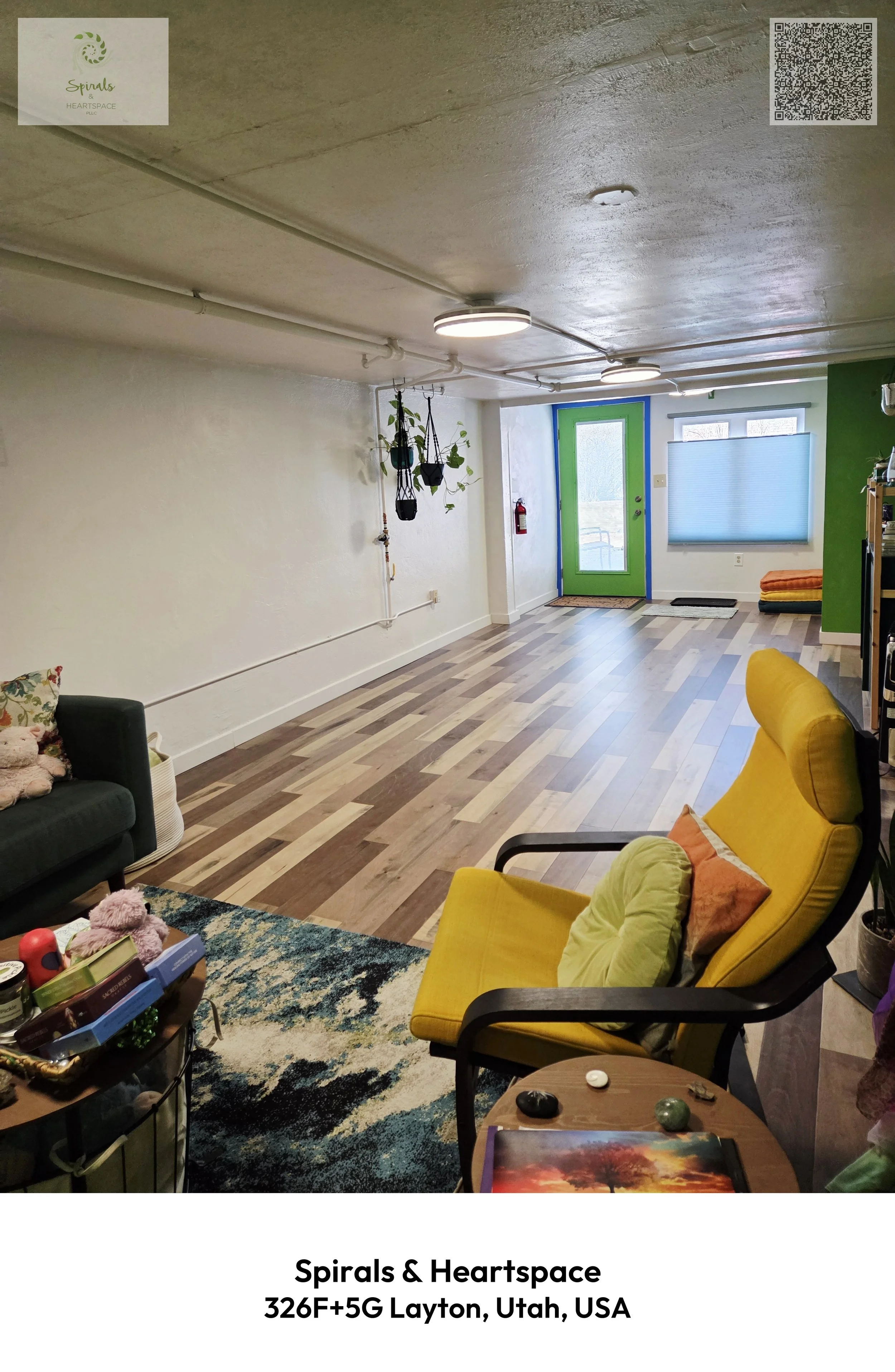
Spirals & Heartspace
Name: Spirals & Heartspace
Address: 534 W Gentile St, Layton, UT 84041
Phone: (385) 301-5252
Website: https://spiralsandheartspacehealing.com/
Hours:
Sunday: Closed
Monday: 9:30 AM – 7:00 PM
Tuesday: 9:30 AM – 7:00 PM
Wednesday: 9:30 AM – 7:00 PM
Thursday: 9:30 AM – 7:00 PM
Friday: 9:30 AM – 7:00 PM
Saturday: Closed
Open-location code / plus code: 326F+5G Layton, Utah, USA
Coordinates: 41.0604503, -111.9762128
Map/listing URL: https://www.google.com/maps/place/Spirals+%26+Heartspace/@41.0604503,-111.9762128,766m/data=!3m2!1e3!4b1!4m6!3m5!1s0x875303311f1d4d1b:0xc6859e5e3fceafe2!8m2!3d41.0604503!4d-111.9762128!16s%2Fg%2F11x781dbvb
Embed iframe:
Socials:
Instagram: https://www.instagram.com/spiralsheartspace/
LinkedIn: https://www.linkedin.com/company/spirals-and-heartspace-pllc
TikTok: https://www.tiktok.com/@spiralsheartspace
X: https://x.com/SpiralsHea61786
YouTube: https://www.youtube.com/@SpiralsHeartspace
The practice is led by Ande Welling, a licensed clinical mental health counselor with training in dance/movement therapy, somatic work, EMDR, trauma care, relational neuroscience, and embodied attachment.
Listed services include therapy, coaching, consultation, authentic movement, trauma therapy, somatic therapy, grief counseling, movement therapy, and attachment therapy.
The practice serves adults who want a deeper body-aware approach to trauma, anxiety, depression, grief, burnout, self-abandonment, family patterns, and relationship wounds.
Spirals & Heartspace offers both in-person sessions in Layton and online therapy for clients in Utah.
The practice is locally positioned for clients in Layton, Kaysville, Farmington, Syracuse, Clearfield, Clinton, Roy, Ogden, Bountiful, Davis County, and nearby northern Utah communities.
The office is listed at 534 W Gentile St in Layton, with public listing hours Monday through Friday from 9:30 AM to 7:00 PM.
Prospective clients can call (385) 301-5252 or visit https://spiralsandheartspacehealing.com/ to ask about consultation options, session fit, and scheduling.
The public map listing for Spirals & Heartspace can help clients verify the Gentile Street office before planning an in-person appointment.
Popular Questions About Spirals & Heartspace
What is Spirals & Heartspace?
Spirals & Heartspace is a Layton, Utah psychotherapy and coaching practice offering somatic, trauma-focused, expressive arts, movement-based, and attachment-informed support for adults.
Who is the therapist at Spirals & Heartspace?
The official site identifies Ande Welling as the therapist, coach, movement facilitator, and guide behind Spirals & Heartspace. Listed credentials include LCMHC, BC-DMT, NCC, GL-CMA, BSE, EMDR Trained, and CCTP-II.
Where is Spirals & Heartspace located?
The matching public listing and LinkedIn profile list the address as 534 W Gentile St, Layton, UT 84041.
Does Spirals & Heartspace offer online therapy?
Yes. The official FAQ states that therapy is available in person or through a HIPAA-compliant telehealth platform for clients who live in Utah.
What services does Spirals & Heartspace provide?
Listed services include therapy, coaching, consultation, authentic movement, trauma therapy, somatic therapy, grief counseling, movement therapy, and attachment therapy.
What makes somatic therapy different from traditional talk therapy?
The official Layton page explains that somatic therapy works with body sensations, movement, and physical experience because trauma and emotional patterns can be held in the nervous system, not only in thoughts.
Do clients need dance experience for movement therapy?
No. The official Layton FAQ says no dance training or special physical ability is required, and that movement therapy uses a client’s natural capacity for movement to access emotions and process experiences.
Does Spirals & Heartspace accept insurance?
The official FAQ says the practice does not take insurance directly, but may provide superbills or bill for out-of-network benefits when applicable. Clients should confirm current reimbursement options directly before scheduling.
What are Spirals & Heartspace’s listed hours?
The matching public listing shows Monday through Friday from 9:30 AM to 7:00 PM, with Saturday and Sunday closed. Appointment availability should be confirmed directly.
How can I contact Spirals & Heartspace?
Call (385) 301-5252, visit https://spiralsandheartspacehealing.com/, or use the listed social profiles: https://www.instagram.com/spiralsheartspace/, https://www.linkedin.com/company/spirals-and-heartspace-pllc, https://www.tiktok.com/@spiralsheartspace, https://x.com/SpiralsHea61786, and https://www.youtube.com/@SpiralsHeartspace.
Landmarks Near Layton, UT
Spirals & Heartspace is located on West Gentile Street in Layton, Utah, with in-person therapy available locally and online therapy available for Utah residents. Clients near these landmarks can call (385) 301-5252 or visit https://spiralsandheartspacehealing.com/ to ask about somatic therapy, trauma therapy, movement therapy, grief counseling, attachment therapy, and consultation options.
- 534 W Gentile St — The listed office address for Spirals & Heartspace; clients can use the map listing to verify the office before visiting.
- West Gentile Street — The local street connected with the practice’s Layton office location.
- Downtown Layton — A practical local reference point for clients navigating central Layton.
- Layton Hills Mall — A major Layton shopping landmark and useful orientation point for clients traveling through the city.
- Interstate 15 near Layton — A major northern Utah route that helps clients reach Layton from nearby Davis County communities.
- Layton FrontRunner Station — A transit landmark for clients traveling by commuter rail through Davis County.
- Ellison Park — A local park and community landmark in Layton.
- Great Salt Lake Shorelands Preserve — A major natural landmark west of Layton and a recognizable Davis County destination.
- Hill Air Force Base — A major regional landmark near Layton and Clearfield.
- Kaysville — A nearby Davis County city listed in the practice’s surrounding service area.
- Farmington — A nearby Davis County community included in the broader local service-area language.
- Ogden — A nearby northern Utah city; clients can ask whether online Utah therapy or in-person Layton sessions are the best fit.