Grief Counseling in the Workplace After Personal Loss
Grief does not wait for personal time. It arrives on workdays, during budget meetings, in the parking lot before a shift, at 2:00 p.m. When an ordinary email suddenly feels impossible to answer. For many employees, the return to work after a death in the family, a miscarriage, the loss of a partner, or another profound personal loss is not a clean transition. It is a collision between private pain and public expectation.
That collision is often misunderstood. Managers may assume an employee will be "back to normal" after bereavement leave. Coworkers may avoid the subject entirely, hoping silence feels respectful. The grieving employee may appear functional, even high performing, while struggling with poor sleep, concentration lapses, irritability, numbness, panic, or physical exhaustion. From the outside, it can look like distraction. From the inside, it can feel like survival.
This is where grief counseling in the workplace becomes more than a nice idea. It becomes a practical, humane support. When done well, it protects dignity, reduces avoidable harm, and helps people remain connected to their work without pretending they are untouched by loss.
Work does not pause the body’s response to grief
One of the biggest mistakes organizations make is treating grief as a purely emotional event. In practice, grief is also cognitive, physical, relational, and behavioral. A grieving employee may forget details they would normally catch. They may cry unexpectedly, feel flooded during routine conversations, or struggle to sit through meetings that once posed no challenge. Some people become restless and unable to settle. Others slow down so much that even simple tasks feel heavy.
This is why the language of trauma therapy is sometimes relevant in grief support, even when the loss itself is expected. Not every bereaved person has trauma, but grief can activate the nervous system in ways that resemble traumatic stress. If someone found a loved one after a sudden death, witnessed medical decline, managed end-of-life decisions under pressure, or had a complicated family history with the person who died, work can trigger reactions they do not fully anticipate. A phone ringing in an open office can sound like the call from the hospital. A calendar reminder can bring back the day of the funeral. A routine drive past a familiar place can collapse the whole day.
The body keeps score in ordinary ways. Tight shoulders. Shallow breathing. Stomach problems. Headaches. Fatigue that is not solved by a weekend off. This is one reason somatic therapy has become an important part of grief care for some adults. It helps people notice and regulate what is happening in the body, not just talk about thoughts. In a workplace context, that matters because not every employee can or wants to process deep feelings during the workday. Sometimes what helps most is learning how to get through a morning without tipping into overwhelm.
What grief counseling looks like when employment is still ongoing
People often imagine counseling as a private, clinical activity that happens entirely outside the workplace. In reality, workplace grief support can take several forms. Some organizations offer an employee assistance program with short-term counseling. Others contract with clinicians who specialize in grief counseling. In smaller companies, the support may be less formal, involving leave flexibility, a thoughtful manager, and referrals to outside care.
The clinical side matters, but the surrounding culture matters just as much. A counselor can help an employee process the loss, develop coping strategies, and manage the strain of returning to responsibilities. Yet if the workplace sends the message that grief should be invisible after a week, counseling alone will have limited effect. A person cannot regulate in an environment that keeps shaming their humanity.
The most effective support usually combines therapeutic care with practical accommodation. That may mean adjusted deadlines for two weeks, a temporary reduction in customer-facing tasks, permission to step out after difficult calls, or a phased return after leave. None of this is extravagant. It is often the difference between retaining a good employee and pushing them into burnout, medical leave, or resignation.
I have seen this play out in two sharply different ways. In one case, a senior employee returned ten days after her husband died. Her manager said the right kind of simple sentence: "I’m glad you’re here, and I don’t expect you to be at full speed." He reassigned one high-conflict client for a month, let her block an hour at midday for counseling appointments, and checked in briefly each Friday without forcing disclosure. She stayed, recovered gradually, and later said the flexibility spared her from having to choose between income and healing.
In another case, a frontline worker lost his brother suddenly and came back after five days because he could not afford more unpaid time. He was written up within three weeks for "attitude" and "poor focus." No one asked whether he had support. No one explained counseling options. His grief came out as agitation, lateness, and difficulty with memory, all common after acute loss. The organization treated symptoms as misconduct. He quit within two months.
The role of managers, and the limits of it
Managers are not therapists, and they should not try to become them. That boundary protects everyone. Still, managers shape the daily experience of grief more than any formal policy does. Their words in the first conversation after a loss tend to be remembered for years.
A useful managerial response is plain, warm, and undramatic. Grief counseling Acknowledge the loss. Express care without prying. Ask what immediate work adjustments would help. Clarify available leave and support. Then keep showing up. Many grieving employees say the hardest part is not the first week, when people are attentive. It is week three or month three, when everyone else has moved on and the grief has not.
What managers should resist is the urge to over-script the interaction. Long speeches often miss the mark. So do euphemisms. "I’m so sorry your mother died" is clearer and kinder than "I heard about your situation." Naming the loss matters. It signals that the person does not have to pretend.
At the same time, there are edge cases that require judgment. Not every employee wants public acknowledgment. Some want privacy because the loss is complicated, stigmatized, or deeply personal. Pregnancy loss, overdose death, suicide, estrangement, and deaths following long family conflict can all create layers of grief that are not easy to discuss at work. A manager should ask what the employee wants coworkers to know, rather than deciding for them.
Why some grief at work becomes especially complicated
There is a difference between grief that hurts deeply and grief that also disrupts a person’s basic sense of safety, identity, or connection. The workplace often sees only the surface behavior, but clinicians know the underlying picture can be complex.
This is where attachment therapy can be relevant. When a person loses someone who served as a primary source of emotional safety, the loss can stir old attachment wounds. A death in adulthood may activate abandonment fears rooted in childhood, especially if the employee already carries a history of neglect, instability, or earlier bereavement. The result may not look like grief in the stereotypical sense. It may look like panic over small changes, sensitivity to criticism, intense reassurance-seeking, or withdrawal from colleagues.
Similarly, grief after an abusive or estranged relationship can be profoundly confusing. People may mourn what they had, what they never had, and what will now never be repaired. Coworkers often expect clean sadness. Real grief is rarely clean. It can include anger, relief, guilt, numbness, and resentment, sometimes all before lunch.
In these cases, a referral to grief counseling with a clinician trained in trauma therapy or attachment therapy can be far more useful than generic support. The goal is not to pathologize mourning. It is to recognize when loss has opened older fractures that make ordinary work demands harder to carry.
Counseling approaches that tend to help employed adults
Not every grieving employee needs weekly therapy for months. Some need a few focused sessions and practical adjustments. Others benefit from sustained care, especially after traumatic loss or when grief collides with earlier mental health concerns. The best approach depends on the person, the nature of the loss, and the pressures of the job.
Several therapeutic methods are especially useful in this setting:
- Grief counseling helps people process the loss itself, make meaning, and adjust to changed routines and identity.
- Somatic therapy addresses the physical stress response, helping with grounding, breathing, tension, and nervous system regulation.
- Trauma therapy may be appropriate when the death was sudden, violent, medically intense, or otherwise overwhelming.
- Attachment therapy can help when loss stirs deep fears of abandonment or unresolved relational pain.
- Movement therapy can support employees who feel stuck, shut down, or unable to access emotion through conversation alone.
Movement therapy is often overlooked because many workplaces still imagine healing as a verbal process. Yet grief is frequently immobilizing. Some people feel trapped in their heads, replaying events or ruminating through the workday. Structured movement, whether in formal therapy or simple body-based practices, can restore a sense of agency. That does not mean asking employees to do yoga in a conference room. It means recognizing that walking meetings, brief stretch breaks, and permission to leave a distressing environment for ten minutes are not trivial accommodations. They are regulation tools.
What supportive workplaces do differently
The companies that handle bereavement well are rarely perfect, but they share a few habits. They do not reduce grief to policy language alone. They understand that timing matters. A person may function reasonably well in the first week because adrenaline carries them. The crash often comes later, once paperwork, family obligations, and social attention fade. A smart workplace plans for that delayed impact.
They also train supervisors in what to say, what not to say, and when to refer. This training does not need to be elaborate. In my experience, even a 60-minute session can improve outcomes if it covers realistic scenarios. Managers should know the difference between support and surveillance. A weekly check-in that asks, "How is your workload feeling this week?" Is support. Repeatedly asking, "Are you over it yet?" In softer language is still pressure.
Another important distinction is between equal treatment and fair treatment. Some leaders worry that adjusting expectations for a grieving employee creates inconsistency. In practice, fairness often requires flexibility. The accountant who can delay a presentation by a week may need a different accommodation than the nurse who must return to direct patient care. The retail employee who cannot afford unpaid leave may need schedule stability https://zionszva163.lucialpiazzale.com/trauma-therapy-for-medical-professionals-healing-the-healers more than counseling referrals. One size fits no one particularly well.
The awkwardness coworkers feel, and how to handle it
Coworkers usually mean well, but they often freeze. They do not know whether to mention the death, send flowers, keep conversation normal, or say nothing. The result is a kind of social vacuum that grieving employees feel immediately.
A brief, direct acknowledgment is usually enough. "I’m sorry about your dad" is enough. "I’ve been thinking of you" is enough. People do not need eloquence. They need steadiness. Problems arise when colleagues avoid the person entirely or, at the other extreme, demand emotional access because they are curious or uncomfortable with silence.
Teams benefit from a small amount of guidance from leadership, with the employee’s consent. If the employee wants others informed, a manager can share what happened, note whether messages are welcome, and remind the team not to press for details. This prevents the grieving person from having to repeat the story ten times before noon.
There is also the issue of performance resentment. If one employee is temporarily carrying less, others may have to carry more. That burden should be named and managed honestly. Quiet resentment can grow quickly if teams feel unsupported. Good leaders redistribute work transparently, set time boundaries on accommodations when possible, and thank the people helping cover. Compassion for the grieving employee and fairness to the team are not competing values when managed well.
Practical adjustments that often matter more than grand gestures
The workplace response to grief is often strongest when it is boring in the best way, less dramatic sympathy, more useful structure. Grand gestures fade. Daily friction stays.
The most helpful accommodations are often the ones that reduce repeated stressors:
- temporary deadline relief
- flexibility for appointments, legal tasks, or estate matters
- predictable scheduling where possible
- reduced exposure to high-conflict interactions
- permission to step away without penalty during acute moments
None of these guarantee an easy return. They do make functioning more possible. And they communicate respect, which matters because grief can leave people feeling stripped down and exposed.
One HR leader I worked with made a small change that had outsized effects. Instead of treating bereavement as a one-time leave event, she built a 30-day follow-up into the process. Every employee returning from bereavement received a quiet check-in after a month asking whether current support was enough. That single practice caught the people who looked composed at first and unraveled later. It also normalized the fact that grief often worsens before it eases.
When grief becomes a workplace risk issue
Most bereaved employees are not dangerous, unstable, or unable to work. It is important not to stigmatize grief. Still, there are situations where employers need to move beyond routine compassion into active risk management. If an employee shows signs of severe impairment, dissociation, substance misuse, suicidal thinking, panic that interferes with safety-sensitive tasks, or inability to perform essential duties, the response should be immediate and clinically informed.
This is especially true in transportation, healthcare, construction, manufacturing, and other roles where inattention can cause harm. In such settings, grief counseling is not separate from operational safety. A forklift driver who has not slept in four nights after a funeral needs more than encouragement. A nurse who becomes flooded every time she enters a room resembling the ICU where her partner died may need temporary reassignment and trauma therapy, not discipline.
That does not mean assuming incapacity. It means making room for honest assessment. Employees are more likely to disclose when the workplace is not punitive. If they fear being labeled weak, they will hide symptoms until something breaks.
The financial reality many employers overlook
Grief support is often framed as a cultural issue, but there is a financial dimension too. Replacing experienced staff is expensive. Absenteeism, presenteeism, errors, workers' compensation claims tied to stress, and disability leaves all cost money. More importantly, they cost continuity and trust. A company may save a few days of paid bereavement leave on paper and lose a skilled employee six weeks later.
Many workers also cannot absorb unpaid time after a death. Funeral costs, travel, legal expenses, and disrupted household income can hit at once. This is one reason sparse bereavement policies disproportionately harm lower-wage employees. The professional with savings may take two extra weeks unpaid. The hourly worker may be back at the register three days after burying a parent. The emotional reality is the same. The economic cushion is not.
Thoughtful policy does not need to promise unlimited leave. It should at least recognize that the standard three-day model is often disconnected from reality. Death-related tasks alone can take longer than that, never mind the grief.
A steadier model for moving forward
The healthiest workplace approach to grief after personal loss is neither sentimental nor cold. It accepts that employees are human beings with bodies, histories, families, and breaking points. It understands that productivity is not improved by denying reality. And it makes practical room for treatment when treatment is needed.
For some employees, grief counseling will be enough to help them regain footing. For others, the path may involve somatic therapy to calm a revved-up nervous system, movement therapy to reconnect with a body that feels frozen, attachment therapy to address relational wounds opened by the loss, or trauma therapy when the death itself was shocking or harrowing. The workplace does not need to dictate those choices. It does need to support access and remove needless barriers.
Most people do not expect work to heal their grief. They do expect work not to deepen it. That is a reasonable standard, and a professional one. When organizations meet it, they do more than retain staff. They build the kind of trust people remember long after the hardest season of their lives has passed.
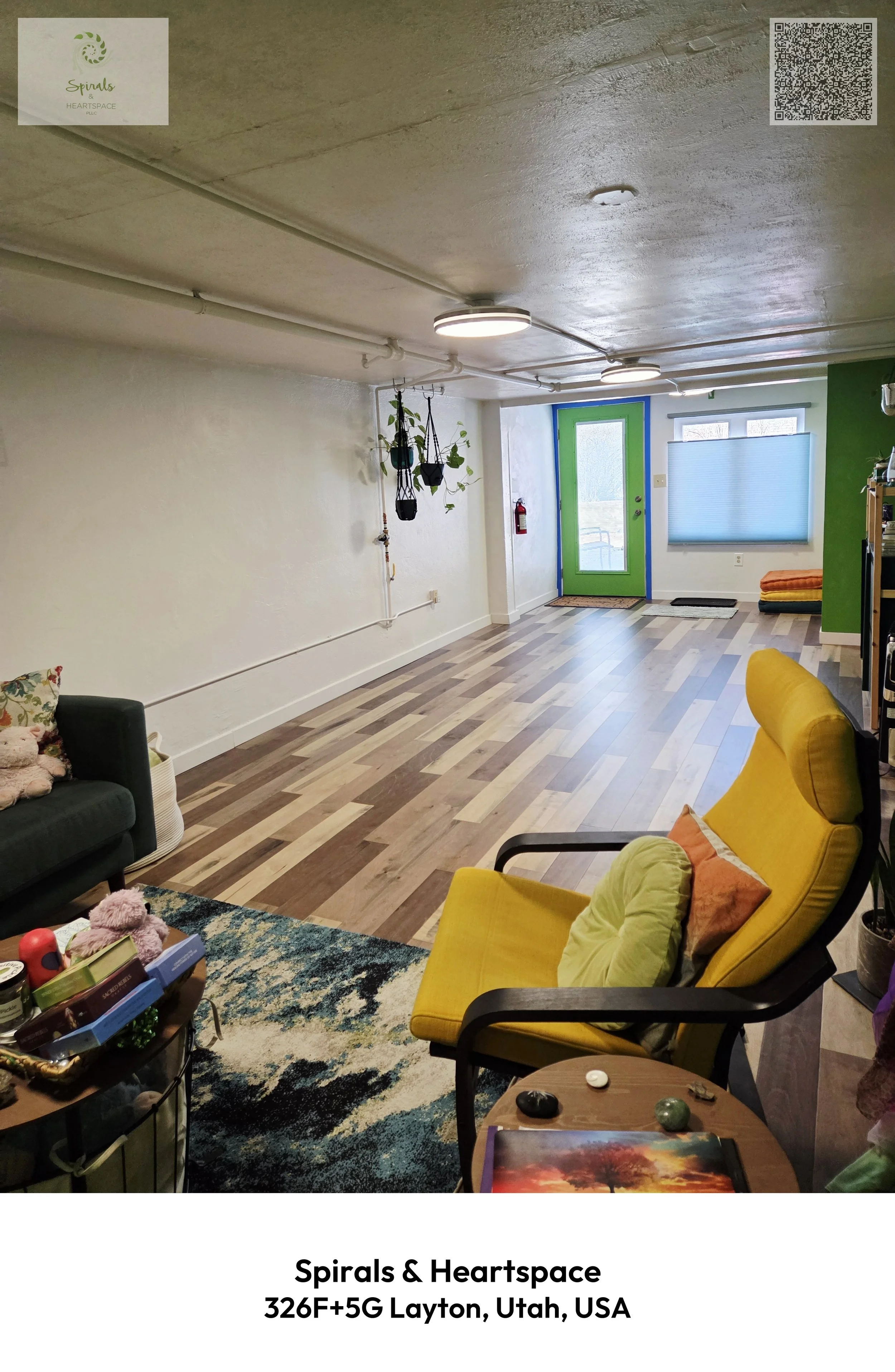
Spirals & Heartspace
Name: Spirals & Heartspace
Address: 534 W Gentile St, Layton, UT 84041
Phone: (385) 301-5252
Website: https://spiralsandheartspacehealing.com/
Hours:
Sunday: Closed
Monday: 9:30 AM – 7:00 PM
Tuesday: 9:30 AM – 7:00 PM
Wednesday: 9:30 AM – 7:00 PM
Thursday: 9:30 AM – 7:00 PM
Friday: 9:30 AM – 7:00 PM
Saturday: Closed
Open-location code / plus code: 326F+5G Layton, Utah, USA
Coordinates: 41.0604503, -111.9762128
Map/listing URL: https://www.google.com/maps/place/Spirals+%26+Heartspace/@41.0604503,-111.9762128,766m/data=!3m2!1e3!4b1!4m6!3m5!1s0x875303311f1d4d1b:0xc6859e5e3fceafe2!8m2!3d41.0604503!4d-111.9762128!16s%2Fg%2F11x781dbvb
Embed iframe:
Socials:
Instagram: https://www.instagram.com/spiralsheartspace/
LinkedIn: https://www.linkedin.com/company/spirals-and-heartspace-pllc
TikTok: https://www.tiktok.com/@spiralsheartspace
X: https://x.com/SpiralsHea61786
YouTube: https://www.youtube.com/@SpiralsHeartspace
The practice is led by Ande Welling, a licensed clinical mental health counselor with training in dance/movement therapy, somatic work, EMDR, trauma care, relational neuroscience, and embodied attachment.
Listed services include therapy, coaching, consultation, authentic movement, trauma therapy, somatic therapy, grief counseling, movement therapy, and attachment therapy.
The practice serves adults who want a deeper body-aware approach to trauma, anxiety, depression, grief, burnout, self-abandonment, family patterns, and relationship wounds.
Spirals & Heartspace offers both in-person sessions in Layton and online therapy for clients in Utah.
The practice is locally positioned for clients in Layton, Kaysville, Farmington, Syracuse, Clearfield, Clinton, Roy, Ogden, Bountiful, Davis County, and nearby northern Utah communities.
The office is listed at 534 W Gentile St in Layton, with public listing hours Monday through Friday from 9:30 AM to 7:00 PM.
Prospective clients can call (385) 301-5252 or visit https://spiralsandheartspacehealing.com/ to ask about consultation options, session fit, and scheduling.
The public map listing for Spirals & Heartspace can help clients verify the Gentile Street office before planning an in-person appointment.
Popular Questions About Spirals & Heartspace
What is Spirals & Heartspace?
Spirals & Heartspace is a Layton, Utah psychotherapy and coaching practice offering somatic, trauma-focused, expressive arts, movement-based, and attachment-informed support for adults.
Who is the therapist at Spirals & Heartspace?
The official site identifies Ande Welling as the therapist, coach, movement facilitator, and guide behind Spirals & Heartspace. Listed credentials include LCMHC, BC-DMT, NCC, GL-CMA, BSE, EMDR Trained, and CCTP-II.
Where is Spirals & Heartspace located?
The matching public listing and LinkedIn profile list the address as 534 W Gentile St, Layton, UT 84041.
Does Spirals & Heartspace offer online therapy?
Yes. The official FAQ states that therapy is available in person or through a HIPAA-compliant telehealth platform for clients who live in Utah.
What services does Spirals & Heartspace provide?
Listed services include therapy, coaching, consultation, authentic movement, trauma therapy, somatic therapy, grief counseling, movement therapy, and attachment therapy.
What makes somatic therapy different from traditional talk therapy?
The official Layton page explains that somatic therapy works with body sensations, movement, and physical experience because trauma and emotional patterns can be held in the nervous system, not only in thoughts.
Do clients need dance experience for movement therapy?
No. The official Layton FAQ says no dance training or special physical ability is required, and that movement therapy uses a client’s natural capacity for movement to access emotions and process experiences.
Does Spirals & Heartspace accept insurance?
The official FAQ says the practice does not take insurance directly, but may provide superbills or bill for out-of-network benefits when applicable. Clients should confirm current reimbursement options directly before scheduling.
What are Spirals & Heartspace’s listed hours?
The matching public listing shows Monday through Friday from 9:30 AM to 7:00 PM, with Saturday and Sunday closed. Appointment availability should be confirmed directly.
How can I contact Spirals & Heartspace?
Call (385) 301-5252, visit https://spiralsandheartspacehealing.com/, or use the listed social profiles: https://www.instagram.com/spiralsheartspace/, https://www.linkedin.com/company/spirals-and-heartspace-pllc, https://www.tiktok.com/@spiralsheartspace, https://x.com/SpiralsHea61786, and https://www.youtube.com/@SpiralsHeartspace.
Landmarks Near Layton, UT
Spirals & Heartspace is located on West Gentile Street in Layton, Utah, with in-person therapy available locally and online therapy available for Utah residents. Clients near these landmarks can call (385) 301-5252 or visit https://spiralsandheartspacehealing.com/ to ask about somatic therapy, trauma therapy, movement therapy, grief counseling, attachment therapy, and consultation options.
- 534 W Gentile St — The listed office address for Spirals & Heartspace; clients can use the map listing to verify the office before visiting.
- West Gentile Street — The local street connected with the practice’s Layton office location.
- Downtown Layton — A practical local reference point for clients navigating central Layton.
- Layton Hills Mall — A major Layton shopping landmark and useful orientation point for clients traveling through the city.
- Interstate 15 near Layton — A major northern Utah route that helps clients reach Layton from nearby Davis County communities.
- Layton FrontRunner Station — A transit landmark for clients traveling by commuter rail through Davis County.
- Ellison Park — A local park and community landmark in Layton.
- Great Salt Lake Shorelands Preserve — A major natural landmark west of Layton and a recognizable Davis County destination.
- Hill Air Force Base — A major regional landmark near Layton and Clearfield.
- Kaysville — A nearby Davis County city listed in the practice’s surrounding service area.
- Farmington — A nearby Davis County community included in the broader local service-area language.
- Ogden — A nearby northern Utah city; clients can ask whether online Utah therapy or in-person Layton sessions are the best fit.