Movement Therapy for Anxiety Relief and Emotional Resilience
Anxiety is often described as a mental health issue, but anyone who has lived with it knows the body tells the story first. Shoulders climb toward the ears. The jaw locks. Breathing turns shallow. Sleep becomes thin and easily interrupted. Some people feel a motor running in their chest. Others go numb, foggy, or strangely detached, as if they are moving through the day half a step behind themselves.
That physical dimension matters because anxiety rarely responds well to insight alone. Understanding why you feel overwhelmed can be useful, sometimes deeply useful, but it does not always calm a racing nervous system. Many clients can explain their triggers in impressive detail and still feel their heart pound in the grocery store, during a difficult conversation, or before bed. This is where movement therapy becomes especially powerful. It gives the body a direct route toward regulation, instead of asking words to do all the work.
Movement therapy is not about forcing exercise on distressed people or turning emotional healing into a fitness project. At its best, it is a skilled, intentional use of movement, posture, rhythm, breath, gesture, and body awareness to help people process emotion, increase tolerance for stress, and rebuild a sense of internal stability. In clinical settings, it may overlap with somatic therapy, trauma therapy, attachment therapy, and even grief counseling, depending on what the person needs and how the practitioner works.
The people who benefit most are often the ones who say, “I know I’m Grief counseling safe, but my body doesn’t believe it.” That sentence captures the gap movement therapy is designed to address.
Why anxiety settles into the body
Anxiety is not simply excessive worry. It is a state of nervous system activation that prepares the body to respond to threat. Sometimes that threat is immediate and real. Sometimes it is social, relational, remembered, or anticipated. The body does not make fine philosophical distinctions in the moment. If it registers danger, it mobilizes.
That mobilization can feel like restlessness, fidgeting, pacing, tight muscles, nausea, sweating, a shaky voice, a clenched stomach, or a strong urge to escape. For other people, especially those with a history of prolonged stress or trauma, anxiety may not show up as visible agitation. It may look more like collapse, shutdown, immobility, or feeling blank. These are still body-based responses.
This is one reason traditional talk therapy, while valuable, may need support from somatic methods. A client can recognize that their partner is not their parent, or that a crowded room is not inherently dangerous, and yet their nervous system may continue to react as though old patterns are still in force. Movement creates a way to work with those patterns in real time.
I have seen this most clearly in clients who struggle to answer simple feeling questions. Ask what they are experiencing emotionally, and they pause. Ask what happens in their body when they think about a stressful event, and the answer comes quickly: “My chest gets tight.” “My feet go cold.” “I feel like I want to back away.” That is not avoidance. It is data.
What movement therapy actually involves
The term movement therapy can mean different things in different settings. In some practices it refers to dance/movement therapy, where expressive movement becomes part of the therapeutic process. In others it is a broader body-based approach that may include slow shifting of posture, walking, stretching, grounding through the feet, guided gestures, breath-coordinated movement, and tracking physical sensations.
The common thread is intention. A therapist is not simply telling someone to move more. They are helping the person notice how movement changes emotional state, what patterns emerge under stress, and where choice becomes possible. A hand that habitually clenches can be softened. A collapsed chest can be gently opened. A frozen body can practice tiny movements that restore a sense of agency.
This matters because anxiety narrows options. It pushes people toward automatic reactions. Movement therapy widens the field. It can help a person learn the difference between activation and panic, between tears and collapse, between rest and shutdown. Those distinctions sound subtle, but they often mark the turning point in treatment.
In somatic therapy, the therapist may guide the client to pendulate between discomfort and steadiness rather than diving headfirst into distress. In trauma therapy, movement might support the completion of defensive responses that were interrupted during earlier frightening experiences. In attachment therapy, body-based work can help clients notice how closeness, distance, eye contact, and posture affect their sense of safety with another person. During grief counseling, movement can be a way to give shape to sorrow that feels too large or too wordless to explain.
The science is still evolving, but the clinical logic is sound
It is important to be careful here. Not every claim made around body-based therapies is equally well supported, and good clinicians should resist overstatement. That said, the clinical logic behind movement therapy is strong. Emotional states are inseparable from physiological states. Breathing patterns, muscle tone, heart rate, balance, orientation, and sensory input all influence how threatened or settled a person feels.
When people move with awareness, several useful things can happen at once. Attention shifts from repetitive thought loops to present-moment sensation. Breathing often changes without force. The body gets new sensory feedback, which can interrupt escalating stress. Rhythmic movement can organize experience and increase predictability. Purposeful action can restore a sense of competence in people who feel overwhelmed or helpless.
You do not need dramatic interventions for this to matter. A 90-second practice of pressing both feet into the floor, lengthening the spine, and turning the head slowly to orient to the room can lower intensity for some people more effectively than ten minutes of arguing with their thoughts. A slow walk after a difficult conversation can discharge activation that might otherwise linger for hours. Gentle cross-body movements can help some clients feel more integrated and less scattered.
The key is matching the intervention to the person. A highly activated client may need pacing, shaking out the hands, or standing and pushing against a wall. A client who tends toward collapse may benefit from slightly more energizing movement, perhaps marching in place or practicing upright posture with support. Someone with a trauma history may need very small, consent-based experiments rather than anything emotionally expressive or stimulating.
Anxiety relief often begins with regulation, not catharsis
There is a common misconception that healing requires intense release. People imagine that if they cry hard enough, sweat enough, or “get it out,” they will be free. Sometimes emotional release is meaningful. Just as often, it becomes another overwhelming event that leaves the person flooded and exhausted.
Experienced movement therapists do not chase catharsis. They build capacity. That means helping clients stay connected to themselves while emotion moves through the body. The goal is not merely to feel more, but to feel without losing organization.
A simple example illustrates the point. A client notices anxiety rising before a work presentation. Instead of trying to suppress it, they stand with both feet hip-width apart, bend their knees slightly, exhale longer than they inhale, and press their palms together for ten seconds at a time. Their shoulders drop a little. They can still feel the stress, but it is now manageable. That is regulation. Nothing dramatic happened, yet the nervous system got enough support to keep functioning.
Over time, repeated experiences like this create confidence. The person no longer sees anxiety as a mysterious force that strikes from nowhere. They begin to recognize precursors and use body-based tools before the spiral intensifies.
How movement therapy builds emotional resilience
Emotional resilience is often misunderstood as toughness. In practice, it is closer to flexibility. A resilient nervous system can activate when needed, settle when the demand passes, and recover after strain. It does not stay stuck in high alert, and it does not collapse at the first sign of discomfort.
Movement therapy develops this flexibility through repeated, embodied experiences of stress and recovery. A client learns to notice an increase in tension without panicking about the tension itself. They experiment with slowing down, grounding, shifting posture, orienting to the environment, or moving through space. They discover that state changes are possible.
This process also strengthens interoception, the ability to sense internal bodily signals. Better interoception helps people detect stress earlier and respond more skillfully. Many anxious individuals only notice their state when it becomes unignorable. By then they are already overwhelmed. Through movement-based work, they may start catching the first signs, perhaps a tightening throat, restless legs, or a subtle clinical somatic therapy urge to withdraw. Early detection makes regulation much easier.
Another important piece is agency. Anxiety often comes with a sense of being overtaken. Movement restores choice. When a person learns, “If I feel frozen, I can rock gently,” or “If my thoughts are racing, I can walk and lengthen my exhale,” they are no longer waiting passively for relief. That shift can be profound.
Trauma changes the equation
For people with trauma histories, especially developmental or relational trauma, movement therapy should be handled with care. The body may not feel like a safe place to land. Closing the eyes, tracking sensation, or moving freely can stir panic, shame, or disorientation. A well-trained therapist understands this and works slowly.
In trauma therapy, the pace matters as much as the method. What helps one client may destabilize another. For example, a grounding exercise that asks someone to feel their pelvis in the chair may be excellent for one person and intolerable for another with a history of bodily violation. Some clients do better starting with external orientation, noticing colors, sounds, and the shape of the room before turning inward at all.
This is where somatic therapy and movement therapy overlap fruitfully. Both value titration, working in small, manageable doses. Instead of plunging into the hardest material, the therapist helps the client move between activation and relative steadiness. That back-and-forth teaches the nervous system that distress can be experienced without becoming endless.
Trauma also affects how people inhabit space. Some make themselves physically small. Some brace constantly. Some cannot tolerate having their back to the door. Some lose the natural impulse to reach, push away, or take up room. Movement therapy can gently restore these basic action patterns. A client may practice extending an arm, leaning back into support, or stepping away from imagined pressure. These are simple movements, but they often carry deep psychological meaning.
Attachment wounds show up in posture, rhythm, and distance
Attachment therapy is usually discussed in emotional and relational terms, but attachment patterns live in the body as much as they do in thought. The person who learned early that closeness was unreliable may unconsciously hold their breath during intimate conversation. The one who had to stay hyper-attuned to a volatile caregiver may scan faces constantly and tense at small changes in tone. Another may move toward people quickly and feel intense distress when separation occurs.
Movement therapy can reveal these patterns without shaming them. In a skilled session, clients might notice how they position themselves in relation to the therapist, how much eye contact feels tolerable, whether they lean forward, withdraw, brace, or collapse when discussing connection. Sometimes a small shift in posture can unlock insight that months of abstract discussion did not reach.
One client, after years of saying she “didn’t need anyone,” noticed during a movement exercise that she consistently balanced on the balls of her feet, as if ready to leave. When she practiced letting her heels take weight, she became tearful. The sensation of staying, physically staying, was unfamiliar. That was not a cure, but it was a true piece of work, and it opened the door to meaningful attachment repair.
Grief does not move in a straight line, and the body knows that
Grief counseling often centers on memory, meaning, and adaptation after loss. All of that matters. Yet grief is also undeniably physical. It can flatten appetite, alter sleep, constrict breathing, weaken energy, and create a heavy ache that people feel in the chest, throat, or limbs. Many grieving people say, “I don’t know where to put this feeling.”
Movement gives grief somewhere to go.
Not every grieving client wants expressive movement. Some do. Others need quieter forms, walking, swaying, stretching, or simply standing and breathing with support. The purpose is not to perform emotion but to accompany it. A person carrying fresh loss may not need analysis in every session. They may need a way to move through waves of feeling without becoming stranded inside them.
There is also a practical side. Grief often disrupts routine, and routine is one of the body’s stabilizers. Gentle, consistent movement can help restore circadian rhythm, appetite cues, and a sense of continuity. That does not erase sorrow. It simply gives the nervous system enough structure to bear sorrow more sustainably.
What sessions can look like in real life
A movement therapy session can be surprisingly ordinary from the outside. There may be talking, long pauses, moments of stillness, and periods of guided movement. Some sessions involve little visible action but a great deal of internal sensing. Others include standing, walking, mirroring gestures, or experimenting with different ways of holding the body while discussing a difficult situation.
A therapist might ask, “What happens in your chest when you say yes to something you don’t want?” or “Can you show me, with your posture, what the anxiety feels like right now?” Once the pattern is visible, they may invite a small variation. “What changes if you uncurl your fingers?” “What if you let your back touch the chair?” “Can you turn your head and notice three things that signal safety?”
That last question speaks to a central strength of movement-based work. It is experiential. People are not just talking about new possibilities. They are feeling them.
Here are a few examples of movements clinicians commonly use, always adapted to the individual:
- Grounding through the feet by standing and slowly shifting weight from heel to toe.
- Pushing palms into a wall to engage strength and reduce panic energy.
- Gentle rocking or swaying to support self-soothing and rhythm.
- Orienting the head and eyes around the room to update the nervous system to the present environment.
- Coordinating slow arm movements with a longer exhale to reduce intensity.
These are not magic techniques. Their usefulness depends on timing, fit, and context. What calms one person may irritate another. A movement that helps on Tuesday may feel wrong on Friday. Good therapy respects that variability.
The trade-offs and limitations worth knowing
Movement therapy is promising, but it is not a universal solution. Some clients dislike body-focused work at first because it feels unfamiliar, exposing, or frustratingly slow. Others are so disconnected from sensation that early sessions feel vague. This does not mean the approach is failing, but it does mean expectations should be realistic.
There are also practical limitations. Not every therapist is well trained in somatic or movement-based modalities. Some use the language loosely without much skill in nervous system pacing. Credentials and supervision matter here. A practitioner should be able to explain why they are using a particular intervention, what signs of overwhelm they watch for, and how they adapt when something is too much.
Physical conditions also need consideration. Chronic pain, mobility limitations, vestibular issues, recent injury, and certain medical conditions may shape what is appropriate. Movement therapy should never ignore the realities of the body it is working with. The goal is not performance. It is regulation and integration.
For clients with severe panic, dissociation, or complex trauma, movement work may need to begin very gently and be integrated with broader treatment. Sometimes medication, structured psychotherapy, sleep support, or other interventions are necessary alongside it. A mature treatment plan is rarely ideological. It uses what helps.
Choosing a therapist who works well with movement
If you are considering this kind of work, the quality of the therapeutic relationship matters as much as the method itself. A good therapist does not impose movement or insist that every problem is stored in the body in some simplistic way. They stay collaborative. They check consent. They notice when the client is becoming more present versus more flooded.
A few signs you are in capable hands include the following:
- The therapist explains exercises clearly and invites feedback rather than pushing compliance.
- They adjust quickly if something increases distress too sharply.
- They can connect body-based work with broader goals such as anxiety relief, trauma recovery, or relationship patterns.
- They respect medical issues, pain, fatigue, and physical limitations.
- They do not promise dramatic breakthroughs from a single technique.
That last point is especially important. Sustainable change usually looks modest before it looks dramatic. You sleep a little better. You recover faster after conflict. You notice tension earlier. You can stay in the room during a hard conversation instead of fleeing or shutting down. These are not small things. They are the building blocks of emotional resilience.
Bringing movement into daily life without turning it into homework
One reason movement therapy works is that it can leave the therapy room and enter ordinary moments. The most effective practices are often the least flashy. They fit into commutes, meetings, parenting, grief, conflict, and bedtime. They do not require special clothes, athletic ability, or a perfect mindset.
A person waiting for difficult news might walk slowly and feel each footstep rather than refresh their phone every 30 seconds. Someone who gets anxious before social events might stand in a doorway, widen their stance, and exhale fully three times before entering. A grieving person who feels trapped in rumination might step outside each afternoon for ten minutes of steady walking, not to “fix” grief, but to give it movement and air.
The value lies in repetition. Nervous systems learn through experience, not slogans. The more often a person pairs stress with a workable body-based response, the more available that response becomes under pressure.
Movement therapy is, at heart, a way of restoring conversation between mind and body. Anxiety breaks that conversation into alarms and static. Skilled movement brings rhythm back. It helps people feel what they feel without becoming ruled by it. It offers relief, yes, but also something sturdier, the growing sense that even when life becomes intense, the body can be a resource rather than an enemy.
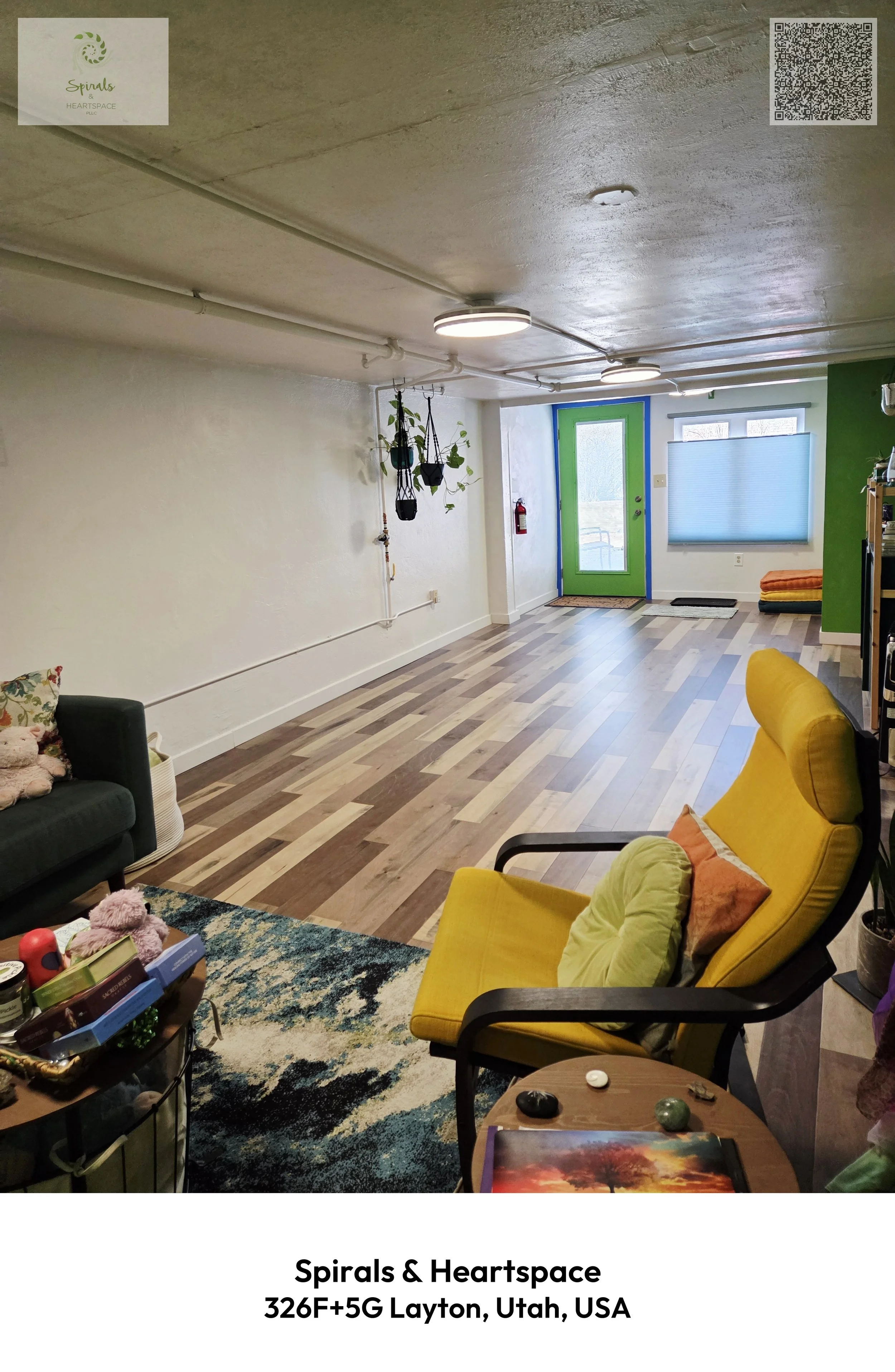
Spirals & Heartspace
Name: Spirals & Heartspace
Address: 534 W Gentile St, Layton, UT 84041
Phone: (385) 301-5252
Website: https://spiralsandheartspacehealing.com/
Hours:
Sunday: Closed
Monday: 9:30 AM – 7:00 PM
Tuesday: 9:30 AM – 7:00 PM
Wednesday: 9:30 AM – 7:00 PM
Thursday: 9:30 AM – 7:00 PM
Friday: 9:30 AM – 7:00 PM
Saturday: Closed
Open-location code / plus code: 326F+5G Layton, Utah, USA
Coordinates: 41.0604503, -111.9762128
Map/listing URL: https://www.google.com/maps/place/Spirals+%26+Heartspace/@41.0604503,-111.9762128,766m/data=!3m2!1e3!4b1!4m6!3m5!1s0x875303311f1d4d1b:0xc6859e5e3fceafe2!8m2!3d41.0604503!4d-111.9762128!16s%2Fg%2F11x781dbvb
Embed iframe:
Socials:
Instagram: https://www.instagram.com/spiralsheartspace/
LinkedIn: https://www.linkedin.com/company/spirals-and-heartspace-pllc
TikTok: https://www.tiktok.com/@spiralsheartspace
X: https://x.com/SpiralsHea61786
YouTube: https://www.youtube.com/@SpiralsHeartspace
The practice is led by Ande Welling, a licensed clinical mental health counselor with training in dance/movement therapy, somatic work, EMDR, trauma care, relational neuroscience, and embodied attachment.
Listed services include therapy, coaching, consultation, authentic movement, trauma therapy, somatic therapy, grief counseling, movement therapy, and attachment therapy.
The practice serves adults who want a deeper body-aware approach to trauma, anxiety, depression, grief, burnout, self-abandonment, family patterns, and relationship wounds.
Spirals & Heartspace offers both in-person sessions in Layton and online therapy for clients in Utah.
The practice is locally positioned for clients in Layton, Kaysville, Farmington, Syracuse, Clearfield, Clinton, Roy, Ogden, Bountiful, Davis County, and nearby northern Utah communities.
The office is listed at 534 W Gentile St in Layton, with public listing hours Monday through Friday from 9:30 AM to 7:00 PM.
Prospective clients can call (385) 301-5252 or visit https://spiralsandheartspacehealing.com/ to ask about consultation options, session fit, and scheduling.
The public map listing for Spirals & Heartspace can help clients verify the Gentile Street office before planning an in-person appointment.
Popular Questions About Spirals & Heartspace
What is Spirals & Heartspace?
Spirals & Heartspace is a Layton, Utah psychotherapy and coaching practice offering somatic, trauma-focused, expressive arts, movement-based, and attachment-informed support for adults.
Who is the therapist at Spirals & Heartspace?
The official site identifies Ande Welling as the therapist, coach, movement facilitator, and guide behind Spirals & Heartspace. Listed credentials include LCMHC, BC-DMT, NCC, GL-CMA, BSE, EMDR Trained, and CCTP-II.
Where is Spirals & Heartspace located?
The matching public listing and LinkedIn profile list the address as 534 W Gentile St, Layton, UT 84041.
Does Spirals & Heartspace offer online therapy?
Yes. The official FAQ states that therapy is available in person or through a HIPAA-compliant telehealth platform for clients who live in Utah.
What services does Spirals & Heartspace provide?
Listed services include therapy, coaching, consultation, authentic movement, trauma therapy, somatic therapy, grief counseling, movement therapy, and attachment therapy.
What makes somatic therapy different from traditional talk therapy?
The official Layton page explains that somatic therapy works with body sensations, movement, and physical experience because trauma and emotional patterns can be held in the nervous system, not only in thoughts.
Do clients need dance experience for movement therapy?
No. The official Layton FAQ says no dance training or special physical ability is required, and that movement therapy uses a client’s natural capacity for movement to access emotions and process experiences.
Does Spirals & Heartspace accept insurance?
The official FAQ says the practice does not take insurance directly, but may provide superbills or bill for out-of-network benefits when applicable. Clients should confirm current reimbursement options directly before scheduling.
What are Spirals & Heartspace’s listed hours?
The matching public listing shows Monday through Friday from 9:30 AM to 7:00 PM, with Saturday and Sunday closed. Appointment availability should be confirmed directly.
How can I contact Spirals & Heartspace?
Call (385) 301-5252, visit https://spiralsandheartspacehealing.com/, or use the listed social profiles: https://www.instagram.com/spiralsheartspace/, https://www.linkedin.com/company/spirals-and-heartspace-pllc, https://www.tiktok.com/@spiralsheartspace, https://x.com/SpiralsHea61786, and https://www.youtube.com/@SpiralsHeartspace.
Landmarks Near Layton, UT
Spirals & Heartspace is located on West Gentile Street in Layton, Utah, with in-person therapy available locally and online therapy available for Utah residents. Clients near these landmarks can call (385) 301-5252 or visit https://spiralsandheartspacehealing.com/ to ask about somatic therapy, trauma therapy, movement therapy, grief counseling, attachment therapy, and consultation options.
- 534 W Gentile St — The listed office address for Spirals & Heartspace; clients can use the map listing to verify the office before visiting.
- West Gentile Street — The local street connected with the practice’s Layton office location.
- Downtown Layton — A practical local reference point for clients navigating central Layton.
- Layton Hills Mall — A major Layton shopping landmark and useful orientation point for clients traveling through the city.
- Interstate 15 near Layton — A major northern Utah route that helps clients reach Layton from nearby Davis County communities.
- Layton FrontRunner Station — A transit landmark for clients traveling by commuter rail through Davis County.
- Ellison Park — A local park and community landmark in Layton.
- Great Salt Lake Shorelands Preserve — A major natural landmark west of Layton and a recognizable Davis County destination.
- Hill Air Force Base — A major regional landmark near Layton and Clearfield.
- Kaysville — A nearby Davis County city listed in the practice’s surrounding service area.
- Farmington — A nearby Davis County community included in the broader local service-area language.
- Ogden — A nearby northern Utah city; clients can ask whether online Utah therapy or in-person Layton sessions are the best fit.