Somatic Therapy for People Who Feel Stuck in Stress Responses
There is a particular kind of exhaustion that does not improve with a weekend off, a meditation app, or another promise to "just calm down." It shows up as a body that keeps bracing long after the threat has passed. Shoulders stay lifted. Sleep stays light. The jaw hardens at small irritations. A text message from the wrong person can send the heart racing. For some people, the stress response is loud and obvious. For others, it is quieter, more chronic, more confusing. They do not feel panicked. They feel numb, flat, foggy, disconnected, or strangely absent from their own lives.
That is often where somatic therapy becomes useful.
Somatic therapy is not simply talking about stress while trying to relax. It is a form of treatment that takes the body's role seriously. When the nervous system has learned to organize itself around danger, words alone may not reach the part of the mind that is reacting. A person can understand, very clearly, that they are safe with their partner, safe in their home, safe in their job, and still feel their body surge into fight, flight, freeze, or collapse. This gap between intellectual understanding and physiological response is one of the most painful parts of unresolved trauma and chronic stress.
In clinical practice, people often arrive saying some version of the same thing: "I know why I react this way, but I cannot stop." That sentence captures the limits of insight when the nervous system is overlearned in survival. Somatic therapy works in that gap.
When stress responses stop being adaptive
A stress response is not a flaw. It is an elegant survival system. The body detects threat, mobilizes energy, narrows attention, changes breathing, shifts blood flow, and prepares for action. If the threat passes and the body completes the cycle, the system resets. Most of the time, that process happens without much thought.
Trouble starts when stress becomes chronic, overwhelming, or relationally complex. A single incident can do it, especially if it involved helplessness, terror, pain, or violation. Repeated experiences can do it more quietly. Growing up with criticism, emotional unpredictability, neglect, addiction in the home, or a caregiver who was sometimes comforting and sometimes frightening can shape the nervous system over years. This is one reason attachment therapy and somatic therapy often overlap in meaningful ways. Many adults who look highly functional from the outside are still carrying a body-level expectation that closeness is risky, needs are dangerous, or rest is unsafe.
That pattern does not always look dramatic. It may look like overworking, overexplaining, people-pleasing, chronic busyness, or the inability to sit still without feeling a rush of unease. It can also look like shutting down in conflict, spacing out during intimacy, losing words under pressure, or feeling emotionally frozen during grief.
In those cases, the body is not malfunctioning. It is protecting in the only way it learned to.
What somatic therapy actually involves
Somatic therapy includes a family of approaches rather than one rigid method. Different clinicians lean on different models, but the shared premise is straightforward: emotional pain lives not only in thoughts and memories, but also in muscular tension, posture, breath, impulses, sensations, and patterns of activation. Treatment helps people notice those patterns, build capacity to stay present with them, and gradually widen the range of responses available.
That sounds abstract until it is seen in the room.
A person describes an argument with their spouse. As they talk, their foot begins tapping, their breath shortens, and one hand clamps around the other wrist. A purely cognitive conversation might stay with the content of the argument. A somatic therapist will also track the body. They might ask, "What happens in your chest as you say that?" Or "Notice your hands for a moment. Do they want to pull away, push, hold on?" These are not decorative questions. They are often the doorway to what the nervous system is trying to complete.
Sometimes the body wants to mobilize. A client who went still during a frightening event may feel a subtle impulse to turn, push, run, or brace. Sometimes it wants the opposite. A chronically activated client may need to find support, weight, stillness, and slower breath before any deeper work is possible. Movement therapy can be part of this process when the body needs more than words and awareness. That does not necessarily mean expressive dance in a studio. It may be as simple as standing, shifting weight, pressing feet into the floor, reaching an arm outward, or letting the spine soften against the chair. Small movements can carry large amounts of unfinished survival energy.
Good somatic work is rarely theatrical. More often, it is precise, paced, and surprisingly subtle.
The common stress patterns people get stuck in
People often assume stress means obvious anxiety, but the nervous system has several ways of coping. If you have ever wondered why you "overreact" in one setting and go blank in another, this is usually why.
- Fight can look like irritability, controlling behavior, sharp defensiveness, rage, or a body that feels constantly primed for confrontation.
- Flight often shows up as racing thoughts, restlessness, perfectionism, overworking, inability to stop planning, and fear of slowing down.
- Freeze may look like indecision, numbness, dissociation, shutdown, or feeling trapped inside your own stillness.
- Fawn usually appears in relational settings, through appeasing, overaccommodating, losing contact with your own preferences, or becoming hyperattuned to others at your own expense.
- Collapse can resemble depression, heavy fatigue, hopelessness, and a deep sense that effort will not change the outcome.
These are not personality types. They are adaptive strategies. Most people use more than one, depending on context. The person who dominates at work may freeze with an angry partner. The person who seems calm in emergencies may collapse once they are alone. Somatic therapy helps map these shifts without shaming them.
Why talking alone is sometimes not enough
Traditional talk therapy can be deeply effective, especially when the therapist is skilled, the relationship is strong, and the goals are clear. Many people benefit from understanding patterns, naming emotions, exploring history, and challenging distorted beliefs. None of that should be dismissed. But in trauma therapy, there are moments when explanation does not change the body fast enough.
Consider the client who fully understands that a slammed door in the hallway is not dangerous, yet their entire system jolts as if impact is imminent. Or the grieving person who knows they are allowed to cry, wants to cry, and cannot access tears at all. Or the survivor of chronic childhood criticism who can recite affirmations but still feels an immediate wave of shame when receiving feedback from a boss.
Those reactions are not failures of insight. They are physiological habits with emotional meaning. Somatic therapy works with those habits directly.
There is also a relational reason this matters. Stress responses often emerge in the presence of other people, not in isolation. This is especially true when the root issue involves attachment injury. A client may remain composed while journaling at home and then feel themselves disappear in the therapy room the moment they sense disappointment, distance, or misunderstanding. An experienced therapist pays attention to those in-the-moment shifts and helps the client notice them safely. That is where attachment therapy and somatic therapy can become a powerful combination. The healing is not only about remembering old pain. It is about having a new embodied experience of contact, boundary, and repair.
The pace matters more than the technique
One of the biggest misconceptions about body-based work is that more intensity means deeper healing. In reality, moving too quickly can recreate overwhelm. The nervous system changes through tolerable contact, not forced catharsis.
This is where professional judgment matters. A skilled therapist is watching for signs that a client is moving outside their window of tolerance. Speech may speed up or disappear. Skin color may change. The client may become glazed, rigid, overly intellectual, agitated, or suddenly unable to track the conversation. When that happens, pushing harder into the story is usually the wrong move. The work is to slow down, orient to the room, feel support under the body, or pendulate between difficult activation and present-day safety.
People sometimes feel disappointed by this at first. They come in wanting to "get to the real issue." But if the body has learned that contact with strong feeling equals danger, then titration is not avoidance. It is the treatment. Small doses create trust. Trust creates capacity. Capacity allows more difficult material to be processed without flooding or shutdown.
In practice, that can mean spending ten minutes on a half-second body reaction. A client mentions their mother's tone of voice and notices a tightness in the throat. Rather than chasing the whole history, the therapist stays with the immediate pattern. What happens when the client notices the tightness? Does the chin lift? Does the stomach clench? Is there an impulse to swallow words, look away, apologize, or go blank? That level of detail may seem modest, but it often leads to profound shifts because the body finally gets to do something different.
Somatic therapy and grief that gets stuck in the body
Grief does not only break the heart. It reorganizes breathing, posture, appetite, energy, attention, and time. Some people move through grief with strong waves of feeling that gradually settle. Others become stranded. They cannot cry, cannot feel, cannot sleep, or cannot stop reliving the final days. The body remains caught between protest and collapse.
This is one place where grief counseling benefits from somatic awareness. A grieving person may need more than permission to talk about the loss. They may need help noticing how the body is holding back the grief or drowning in it. Sometimes the chest feels armored. Sometimes the throat locks. Sometimes the body becomes relentlessly agitated because stillness brings the reality of absence too close.
I have seen clients who thought they were "doing grief wrong" because they felt numb for months after a death. Often the numbness was not a lack of love. It was a protective freeze response. Once the nervous system felt enough support and safety, small physical signs of thawing would emerge, a longer exhale, warmth in the face, tears that arrived unexpectedly, a hand resting over the heart without effort. Those moments matter. They are often the start of mourning becoming possible.
Grief also carries relational themes. The loss of a parent, partner, child, friend, pregnancy, or former self after illness can activate attachment wounds and old trauma at the same time. The person is not only grieving what is gone. They may also be reliving earlier experiences of abandonment, helplessness, or unmet need. Somatic therapy helps sort what belongs to the present loss and what has been stirred from much older layers.
What a first phase of treatment often looks like
Many people imagine trauma therapy as diving quickly into the worst thing that ever happened. In well-paced somatic work, the first phase is often less dramatic and more practical. The therapist is helping the client build enough stability to work with stress without becoming consumed by it.
A strong early phase often includes the following:
- learning to notice activation before it becomes overwhelming
- identifying what support actually feels like in the body, not just in theory
- developing simple ways to orient, ground, and regulate between sessions
- tracking relational triggers, especially around closeness, conflict, and boundaries
- distinguishing present-day stress from old survival responses
This phase is not filler. It creates the conditions that make deeper processing possible. It also helps clients stop blaming themselves for having nervous systems that react faster than thought.
What change can look like, beyond feeling calmer
People often seek somatic therapy because they want relief from panic, tension, sleeplessness, or reactivity. Those are valid goals, and many clients do improve in those areas. But some of the most meaningful changes are more nuanced.
A person who used to freeze in conflict can stay present long enough to say, "I need a minute." Someone who compulsively cared for everyone else can notice the first body sign that resentment is building and set a boundary before exploding. A grieving client can feel sorrow without disappearing into it. A trauma survivor can sense attraction and fear at the same time without immediately cutting off from intimacy. A parent can recognize their own activation before passing it on to a child.
These shifts may sound small on paper. In lived experience, they change relationships, health, work, and self-respect.
The body also begins to offer new information. Hunger returns. Sleep gets deeper. Breathing drops lower. Pleasure becomes possible again. Some clients notice they are spontaneously less vigilant in public spaces. Others realize they are no longer rehearsing every conversation before it happens. The goal is not permanent serenity. It is flexibility. Stress responses should be available when needed and able to settle when not.
Where somatic therapy fits with other approaches
Somatic therapy is not a rival to every other model. It often works best as part of an integrated treatment plan. A person dealing with acute trauma may need practical stabilization, psychiatric support, or medical evaluation alongside therapy. Someone in major grief may benefit from grief counseling that includes ritual, meaning-making, family support, and body-based regulation. A client with long-standing relational wounds may need both somatic therapy and attachment therapy to address what happens inside close relationships.
Cognitive approaches can help challenge shame and catastrophic thinking. Psychodynamic work can illuminate longstanding relational patterns. Exposure-based methods can be appropriate in some cases. Movement therapy may help clients who feel trapped in language or who reconnect more easily through action than reflection. None of these approaches need to compete if the clinician knows what they are doing.
The key question is not which method sounds best. It is which method fits the person's nervous system, history, resources, and goals right now.
Grief counselingThere are also times when somatic work needs caution. People with severe dissociation, active substance instability, untreated psychosis, or unsafe living conditions may need a slower, more structured approach. Body awareness can feel threatening if the body has long been associated with pain, violation, or chaos. A competent therapist will not force body focus simply because it is fashionable. They will collaborate, explain the rationale, and adjust the work to the client's readiness.
Choosing a therapist with discernment
The phrase "somatic therapy" is used broadly, and not all practitioners mean the same thing by it. Some have extensive clinical training in trauma therapy and nervous system work. Others use body-oriented language more casually. For clients, this distinction matters.
A good therapist should be able to explain how they pace trauma work, what they do when a client becomes overwhelmed, and how they integrate the body without making the process feel invasive or performative. They should also respect consent at every stage. No one should feel pressured into touch, movement, or emotional intensity that does not feel manageable.
It is reasonable to ask practical questions. What does a session typically look like? How do they work with freeze or dissociation? How do they understand attachment wounds? What is their experience with grief counseling if loss is part of the picture? If they use movement therapy, how structured or gentle is that process? Clear answers are a good sign. Vague mysticism is not.
The felt sense of the relationship matters too. Somatic therapy depends heavily on safety, pacing, and attunement. You do not need instant trust, but you do need enough steadiness to become curious about your own reactions in the room.
For people who have tried everything else
Some of the strongest candidates for somatic therapy are the people who are tired of being told they are "so self-aware." They have read the books. They know their patterns. They can explain Go to the website their childhood beautifully. They understand why they chase unavailable partners or shut down under pressure. Yet their body continues to react as if every insight lives in a separate compartment from real life.
That is not a sign that therapy has failed them. It usually means the next layer of work is embodied.
When people begin to track their own nervous systems with compassion rather than contempt, something important shifts. The question stops being, "Why am I like this?" And becomes, "What is my body trying to protect me from right now?" From there, options open. A clenched jaw becomes a signal, not a character flaw. A numb spell becomes a cue for support, not evidence of brokenness. A surge of panic becomes something that can be met, paced, and understood.
Feeling stuck in a stress response can make life look smaller than it is. You avoid the conversation, the grief, the rest, the closeness, the risk, the stillness. Somatic therapy does not erase what happened. It does something both humbler and more profound. It helps the body learn that survival is no longer the only task. Once that lesson begins to take hold, people often find they have more room for choice, more access to feeling, and more capacity to live in the present tense.
Spirals & Heartspace
Name: Spirals & Heartspace
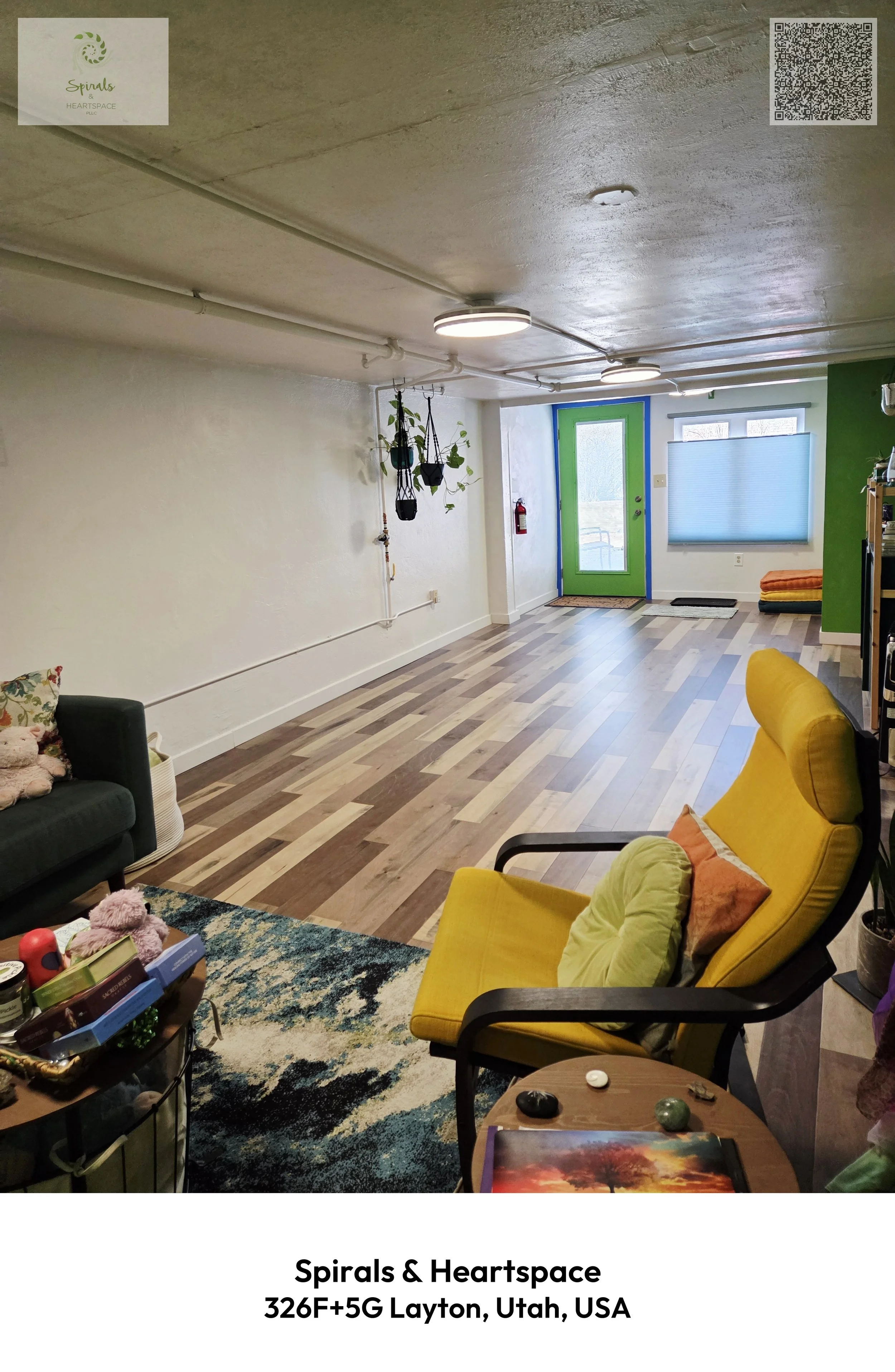
Address: 534 W Gentile St, Layton, UT 84041
Phone: (385) 301-5252
Website: https://spiralsandheartspacehealing.com/
Hours:
Sunday: Closed
Monday: 9:30 AM – 7:00 PM
Tuesday: 9:30 AM – 7:00 PM
Wednesday: 9:30 AM – 7:00 PM
Thursday: 9:30 AM – 7:00 PM
Friday: 9:30 AM – 7:00 PM
Saturday: Closed
Open-location code / plus code: 326F+5G Layton, Utah, USA
Coordinates: 41.0604503, -111.9762128
Map/listing URL: https://www.google.com/maps/place/Spirals+%26+Heartspace/@41.0604503,-111.9762128,766m/data=!3m2!1e3!4b1!4m6!3m5!1s0x875303311f1d4d1b:0xc6859e5e3fceafe2!8m2!3d41.0604503!4d-111.9762128!16s%2Fg%2F11x781dbvb
Embed iframe:
Socials:
Instagram: https://www.instagram.com/spiralsheartspace/
LinkedIn: https://www.linkedin.com/company/spirals-and-heartspace-pllc
TikTok: https://www.tiktok.com/@spiralsheartspace
X: https://x.com/SpiralsHea61786
YouTube: https://www.youtube.com/@SpiralsHeartspace
The practice is led by Ande Welling, a licensed clinical mental health counselor with training in dance/movement therapy, somatic work, EMDR, trauma care, relational neuroscience, and embodied attachment.
Listed services include therapy, coaching, consultation, authentic movement, trauma therapy, somatic therapy, grief counseling, movement therapy, and attachment therapy.
The practice serves adults who want a deeper body-aware approach to trauma, anxiety, depression, grief, burnout, self-abandonment, family patterns, and relationship wounds.
Spirals & Heartspace offers both in-person sessions in Layton and online therapy for clients in Utah.
The practice is locally positioned for clients in Layton, Kaysville, Farmington, Syracuse, Clearfield, Clinton, Roy, Ogden, Bountiful, Davis County, and nearby northern Utah communities.
The office is listed at 534 W Gentile St in Layton, with public listing hours Monday through Friday from 9:30 AM to 7:00 PM.
Prospective clients can call (385) 301-5252 or visit https://spiralsandheartspacehealing.com/ to ask about consultation options, session fit, and scheduling.
The public map listing for Spirals & Heartspace can help clients verify the Gentile Street office before planning an in-person appointment.
Popular Questions About Spirals & Heartspace
What is Spirals & Heartspace?
Spirals & Heartspace is a Layton, Utah psychotherapy and coaching practice offering somatic, trauma-focused, expressive arts, movement-based, and attachment-informed support for adults.
Who is the therapist at Spirals & Heartspace?
The official site identifies Ande Welling as the therapist, coach, movement facilitator, and guide behind Spirals & Heartspace. Listed credentials include LCMHC, BC-DMT, NCC, GL-CMA, BSE, EMDR Trained, and CCTP-II.
Where is Spirals & Heartspace located?
The matching public listing and LinkedIn profile list the address as 534 W Gentile St, Layton, UT 84041.
Does Spirals & Heartspace offer online therapy?
Yes. The official FAQ states that therapy is available in person or through a HIPAA-compliant telehealth platform for clients who live in Utah.
What services does Spirals & Heartspace provide?
Listed services include therapy, coaching, consultation, authentic movement, trauma therapy, somatic therapy, grief counseling, movement therapy, and attachment therapy.
What makes somatic therapy different from traditional talk therapy?
The official Layton page explains that somatic therapy works with body sensations, movement, and physical experience because trauma and emotional patterns can be held in the nervous system, not only in thoughts.
Do clients need dance experience for movement therapy?
No. The official Layton FAQ says no dance training or special physical ability is required, and that movement therapy uses a client’s natural capacity for movement to access emotions and process experiences.
Does Spirals & Heartspace accept insurance?
The official FAQ says the practice does not take insurance directly, but may provide superbills or bill for out-of-network benefits when applicable. Clients should confirm current reimbursement options directly before scheduling.
What are Spirals & Heartspace’s listed hours?
The matching public listing shows Monday through Friday from 9:30 AM to 7:00 PM, with Saturday and Sunday closed. Appointment availability should be confirmed directly.
How can I contact Spirals & Heartspace?
Call (385) 301-5252, visit https://spiralsandheartspacehealing.com/, or use the listed social profiles: https://www.instagram.com/spiralsheartspace/, https://www.linkedin.com/company/spirals-and-heartspace-pllc, https://www.tiktok.com/@spiralsheartspace, https://x.com/SpiralsHea61786, and https://www.youtube.com/@SpiralsHeartspace.
Landmarks Near Layton, UT
Spirals & Heartspace is located on West Gentile Street in Layton, Utah, with in-person therapy available locally and online therapy available for Utah residents. Clients near these landmarks can call (385) 301-5252 or visit https://spiralsandheartspacehealing.com/ to ask about somatic therapy, trauma therapy, movement therapy, grief counseling, attachment therapy, and consultation options.
- 534 W Gentile St — The listed office address for Spirals & Heartspace; clients can use the map listing to verify the office before visiting.
- West Gentile Street — The local street connected with the practice’s Layton office location.
- Downtown Layton — A practical local reference point for clients navigating central Layton.
- Layton Hills Mall — A major Layton shopping landmark and useful orientation point for clients traveling through the city.
- Interstate 15 near Layton — A major northern Utah route that helps clients reach Layton from nearby Davis County communities.
- Layton FrontRunner Station — A transit landmark for clients traveling by commuter rail through Davis County.
- Ellison Park — A local park and community landmark in Layton.
- Great Salt Lake Shorelands Preserve — A major natural landmark west of Layton and a recognizable Davis County destination.
- Hill Air Force Base — A major regional landmark near Layton and Clearfield.
- Kaysville — A nearby Davis County city listed in the practice’s surrounding service area.
- Farmington — A nearby Davis County community included in the broader local service-area language.
- Ogden — A nearby northern Utah city; clients can ask whether online Utah therapy or in-person Layton sessions are the best fit.