Trauma Therapy Myths That May Be Holding You Back From Healing
People often wait years before seeking help for trauma, and when they finally do, they arrive carrying more than pain. They also carry ideas about what healing is supposed to look like. Some of those ideas come from movies, social media, family beliefs, or a single bad experience with therapy years ago. Some come from a culture that still tends to treat trauma as either a private weakness or a dramatic crisis, with very little room in between.
That gap matters. Trauma therapy can be life changing, but myths about it often keep people away long after they have begun paying the price in sleep, relationships, work, physical health, and a shrinking sense of possibility. Many people assume they have to be falling apart to qualify for care. Others assume that if they are functioning on paper, then what happened to them should no longer matter. Both assumptions miss how trauma actually works.
Trauma is not defined only by the event. It is also shaped by what happened inside the nervous system, what meaning was made of the experience, whether support was available afterward, and how the body learned to protect itself. Two people can live through similar events and have very different responses. One person may have intrusive memories and panic. Another may become highly productive, emotionally numb, and chronically tense. Both may benefit from trauma therapy.
The most common myths are persuasive because they contain a grain of truth. Therapy can be painful at times. It does involve talking, but not only talking. It can take time, but it does not need to drag on forever without direction. The problem starts when partial truths harden into rules. Then people who could be helped start telling themselves they are not the kind of person who belongs in a therapy office.
Let’s look at the myths that tend to keep people stuck.
Myth: if I can function, I must be fine
This is one of the most expensive misunderstandings I see. A person can hold a job, pay bills, care for children, meet deadlines, and still be living in a constant state of internal alarm. Functioning is not the same as healing. In fact, high functioning can sometimes be part of the survival strategy.
Many trauma survivors become exceptionally capable because control feels safer than uncertainty. They stay busy because slowing down lets unwanted memories, sensations, or grief catch up. They perform well because approval lowers the risk of rejection. On the outside, this can look like resilience. On the inside, it may feel like bracing all day long.
A person in this position may not say, “I have trauma.” They are more likely to say, “I’m exhausted for no obvious reason,” “I overreact to small things,” “I can’t relax even when nothing is wrong,” or “I keep choosing relationships that leave me anxious.” Those are not failures of character. They are often signs that the body and mind adapted to danger and never fully got the message that the danger ended.
Trauma therapy is not reserved for people in acute crisis. It is also for the person who has built a decent life but cannot enjoy it, trust it, or settle into it.
Myth: trauma therapy means reliving everything in detail
This fear stops many people before they even make the first appointment. They imagine sitting in a room and being forced to recount the worst moments of their life, minute by minute, until they break down. For some, that image comes from older therapy models or from hearing someone else’s difficult experience. For others, it is simply what they think “processing trauma” must mean.
Good trauma therapy is not an endurance contest. A skilled clinician does not drag a person into material their nervous system cannot handle. The work usually begins with stability, not exposure. That may include learning how to recognize activation in the body, how to come back into the present, how to notice triggers, and how to build enough internal and external safety that deeper work is possible.
There are times when telling the story matters. Narrative can help restore coherence, reduce shame, and put words to experiences that once felt unspeakable. But details are not always required, and more detail is not automatically better. In many cases, the central task is not perfect recall. It is helping the nervous system stop responding as though the threat is still current.
This is one reason approaches such as somatic therapy can be so useful. Somatic therapy pays attention to physical sensations, posture, breath, tension, shutdown, and the ways the body signals danger or safety. A person might work with the felt sense of tightness in the chest, the impulse to flee, or the collapse that appears when conflict arises. That is not avoiding the trauma. It is working directly with one of the places trauma lives most stubbornly: the body.
Myth: talking about the past only makes things worse
There is a kernel of truth here. Talking about the past without enough support, pacing, or skill can leave someone flooded and raw. That does happen, and when it does, people may come away believing therapy itself is harmful. The more accurate statement is this: uncontained, poorly paced trauma work can make symptoms worse. Effective trauma therapy aims for the opposite.
One difference between helpful processing and unhelpful rehashing is whether the person remains connected to the present while exploring the past. If someone tells their story and ends the session feeling destabilized for days, unable to sleep, and with no tools to regulate, something in the approach needs adjusting. If, on the other hand, they can approach difficult material in manageable pieces, track what is happening inside them, and return to a greater sense of control, the work is often productive even when it is emotional.
Therapy should widen a person’s capacity, not repeatedly overwhelm it. Some sessions will feel hard. Tears, anger, grief, and fatigue are not signs that therapy is failing. But there is a difference between meaningful discomfort and being pushed beyond what the system can integrate.
That distinction matters especially for people with complex trauma, developmental trauma, or histories of chronic neglect. In those cases, the wound is not always a single event. It may be years of adapting to inconsistency, fear, criticism, or emotional absence. The therapy often needs to move more slowly because the issue is not just memory. It is the structure of safety, trust, and self experience itself.
Myth: only combat veterans or survivors of extreme violence have “real” trauma
This belief causes a great deal of unnecessary self dismissal. People compare their pain to someone else’s and decide they have no right to seek help. They say things like, “Nothing that bad happened,” even while describing childhood humiliation, medical trauma, repeated abandonment, coercive relationships, sudden loss, or years of walking on eggshells.
Trauma is not a competition. Severe events can certainly be traumatic, but so can experiences that were chronic, relational, and less visible. A child who never knows whether a parent will be warm or enraged may grow up hypervigilant. A person who was repeatedly mocked when upset may learn to disconnect from their emotions. Someone who endured a frightening hospitalization may still panic around medical settings years later. A partner who spent years being subtly controlled may have trouble trusting their own perception long after the relationship ends.
Attachment therapy often becomes relevant here, particularly when the trauma is woven into early relationships. When the people who were supposed to provide safety were also the source of fear, inconsistency, or emotional confusion, the result can show up later as anxious attachment, avoidance, intense fear of rejection, or difficulty reading others accurately. This does not mean the person is broken. It means their relationship templates were shaped under pressure.
The nervous system does not grade suffering on a moral scale. It responds to threat, unpredictability, helplessness, and isolation. Whether the source was a battlefield, a household, a hospital room, or a school hallway, the effects deserve attention.
Myth: if I do trauma therapy, I’ll become less functional before I get better
Sometimes people avoid treatment because they are afraid of opening a door they will not be able to close. They worry that if they let themselves feel, everything will unravel. This concern makes sense, especially for people who have survived by containing enormous amounts of emotion.
In practice, trauma therapy should be calibrated to protect daily life as much as possible. A seasoned therapist will consider work demands, parenting responsibilities, sleep, substance use, physical health, and current stress load before deciding how quickly to move. There may be periods where emotions feel closer to the surface. That can happen when numbness begins to thaw. But the goal is not collapse. The goal is increased flexibility.
Healing rarely looks like a straight line. A person might become more aware of anxiety before they become less driven by it. They might notice grief more acutely before it starts to move. They might begin setting boundaries and then feel temporary guilt because old relational patterns are being disrupted. Those shifts can be uncomfortable, but they are different from being destabilized beyond function.
When therapy is well matched, many people actually become more functional fairly quickly in concrete ways. Sleep may https://hectorbfcq781.theburnward.com/movement-therapy-for-somatic-release-shaking-off-stress improve. Startle responses may soften. Conflicts may become easier to navigate. Concentration may return. The person may not feel transformed overnight, but life can begin to feel less expensive.
Myth: trauma is all in the mind
Anyone who has ever had their stomach drop at a sound, frozen during conflict, or felt exhausted after a family visit already knows this is not true. Trauma is psychological, yes, but it is also physiological. Heart rate changes, muscle tension, digestion shifts, sleep disruption, headaches, dissociation, chronic pain, and immune stress can all be part of the picture.
That does not mean every physical symptom is caused by trauma. Bodies are complex, and good care should never reduce all medical issues to psychology. Still, it is a mistake to imagine trauma therapy as something that happens only through insight and interpretation. The body often tells the story long before the conscious mind is ready.
This is where movement therapy can play an important role for some people. Trauma often interrupts natural defensive responses. A person may have wanted to run, push away, cry out, or collapse but could not. The body learns unfinished patterns. Through carefully guided movement, posture work, and awareness, some clients begin to complete responses that were once blocked. The goal is not dramatic catharsis. It is a restored sense of agency and regulation.
Even subtle shifts can matter. A client who learns to notice when their shoulders rise in anticipation of criticism, and then learns how to soften, breathe, orient to the room, and stay present, is doing trauma work. A client who can feel anger in their body without instantly turning it inward is doing trauma work. Healing is often less theatrical than people expect, and more embodied.
Myth: if I cannot remember everything clearly, therapy will not work
Trauma can scramble memory. Some people remember too much and cannot stop. Others remember only fragments, body sensations, images, or emotional states without a clean narrative. Neither pattern disqualifies someone from healing.
Memory under threat does not behave like memory under calm conditions. Attention narrows. Sensory details may become vivid while sequence disappears. A person may remember the wallpaper and not the order of events. They may know they felt terror but not know why certain dates or faces are hard to place. Shame can make this worse, because many survivors assume gaps mean they are exaggerating or unreliable.
Therapy does not require perfect recall. Often the work begins with what is present now: panic in crowded spaces, numbness during intimacy, inability to trust praise, recurring nightmares, chronic guilt, or sudden shutdown during disagreement. Those patterns provide meaningful information. A careful therapist helps the person build safety and curiosity around what is known, without pressuring them to produce a courtroom quality account of the past.
There are cases where memory work needs exceptional caution. Suggestive techniques, certainty without evidence, and overconfident interpretations can do harm. Ethical trauma therapy does not manufacture narratives. It works respectfully with lived experience, present symptoms, and the client’s own pace.
Myth: grief is separate from trauma, so I should treat them differently
Grief and trauma often overlap. A death can be traumatic. A trauma can involve grief for the person you were before it happened, for the childhood you did not get, for relationships that could not survive, or for years lost to survival mode. People who seek grief counseling sometimes discover that what keeps the pain stuck is not only sadness, but terror, guilt, shock, or unresolved helplessness. Likewise, people who come in for trauma work often find that what has been waiting underneath their vigilance is grief.
This overlap matters because it changes what helps. Grief alone may call for mourning, meaning making, and support in adjusting to life after loss. Trauma layered into grief may also require work with intrusive images, avoidance, dissociation, body activation, or shame. If a person says, “I cannot think about my father’s death without feeling like I’m right back in the hospital room,” that suggests trauma. If they say, “I miss her every day and do not know who I am without her,” that may be grief, though the two can coexist.
Good therapy does not force a false separation. It recognizes that loss lives in many registers at once. Sometimes the first step is reducing the physiological charge around the death. Sometimes it is making space for mourning that had to be postponed for years.
Myth: one kind of therapy works for everyone
This is perhaps the most practical myth to let go of. There is no single best method for every person, every trauma history, every culture, or every season of life. Some people benefit from structured, skills based approaches. Others need relational depth and careful attention to attachment wounds. Some respond well to somatic therapy or movement therapy because words arrive late. Others need clear psychoeducation to understand what their symptoms mean. Many do best with an integrative therapist who can draw from several approaches.
Even timing matters. A person leaving an abusive relationship may first need stabilization, housing support, legal coordination, and help with sleep. Deeper processing may come later. A person in the early weeks after a sudden death may need containment and grief counseling before intensive trauma work. A person with a history of developmental trauma may need attachment therapy that prioritizes consistency, pacing, and a corrective emotional experience over rapid symptom reduction.
This Grief counseling is why a disappointing experience with one therapist should not be treated as proof that trauma therapy does not work. It may only mean the fit, method, or timing was off. Therapy is not magic, but neither is it interchangeable.
What effective trauma therapy often looks like in real life
Despite the myths, good trauma treatment is usually less dramatic than people imagine and more practical. It often includes ordinary sounding shifts that have extraordinary effects over time. A person starts sleeping through the night more often. They recognize a trigger before it becomes a fight. They stop apologizing reflexively. They notice the difference between fear and intuition. They can receive care without scanning for the hidden cost.
The room itself matters. Predictability matters. The therapist’s ability to notice when you are leaving the window of tolerance matters. So does their humility. Trauma survivors do not need someone who performs expertise at them. They need someone who can track complexity, respect defenses for the protective strategies they once were, and help build new options without shaming the old ones.
Sometimes progress looks almost invisible from the outside. A client who used to dissociate during conflict can stay present for five extra minutes. A client who never cried begins to feel sadness without drowning in it. A client who always chose unavailable partners notices the pattern before repeating it. These are not small things. They are signs that the nervous system is gaining range.
A better question than “should I be over this by now?”
Most people who are hesitant about trauma therapy ask some version of the wrong question. They ask whether what happened was bad enough, whether they are weak for still being affected, whether therapy means they are broken, whether they should be able to fix it alone.
A more useful question is this: is the past still shaping my present in ways that cost me peace, freedom, health, or connection?
If the answer is yes, then the issue is not whether you have earned the right to care. The issue is whether you are willing to keep paying that cost. Trauma adapts people brilliantly to unbearable circumstances. The problem is that those adaptations often remain active long after their usefulness has expired. Hypervigilance, shutdown, people pleasing, emotional numbing, overwork, avoidance, and distrust are not random defects. They are intelligent responses that may now be limiting your life.
Trauma therapy offers a way to update those responses. Sometimes that happens through words. Sometimes through body based work. Sometimes through grief counseling, somatic therapy, movement therapy, or attachment therapy, depending on what the history calls for. The form matters less than the quality of the work and the fit between therapist and client.
Healing is not amnesia. It is not pretending the past was fine. It is not becoming endlessly calm, agreeable, or unaffected. More often, it is becoming less ruled by old danger. It is having more choice. More room in the body. More access to joy without bracing for loss. More honesty in relationships. More rest. More of your life returned to you.
And for many people, that begins the moment they stop believing the myths that taught them to stay away.
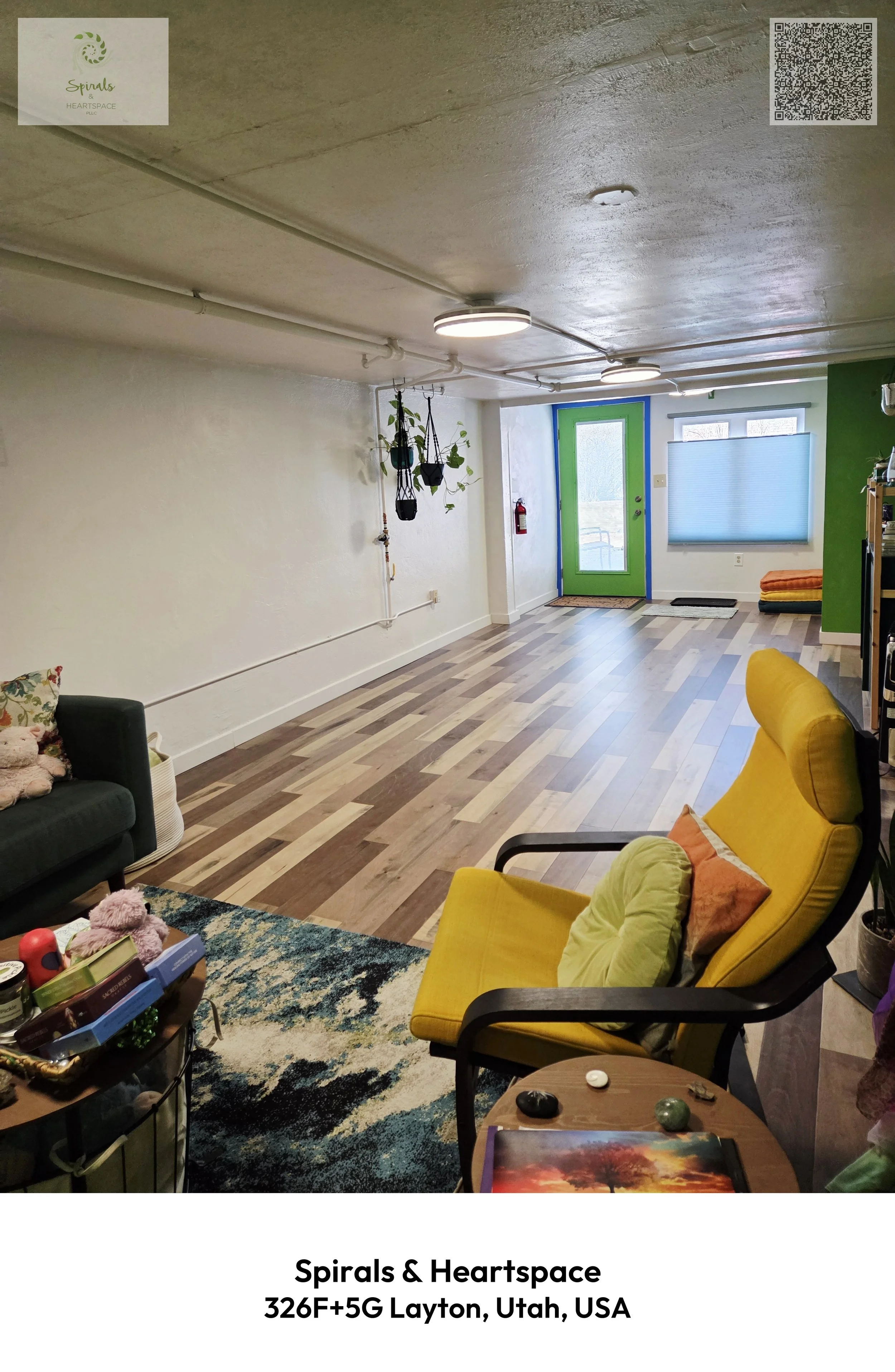
Spirals & Heartspace
Name: Spirals & Heartspace
Address: 534 W Gentile St, Layton, UT 84041
Phone: (385) 301-5252
Website: https://spiralsandheartspacehealing.com/
Hours:
Sunday: Closed
Monday: 9:30 AM – 7:00 PM
Tuesday: 9:30 AM – 7:00 PM
Wednesday: 9:30 AM – 7:00 PM
Thursday: 9:30 AM – 7:00 PM
Friday: 9:30 AM – 7:00 PM
Saturday: Closed
Open-location code / plus code: 326F+5G Layton, Utah, USA
Coordinates: 41.0604503, -111.9762128
Map/listing URL: https://www.google.com/maps/place/Spirals+%26+Heartspace/@41.0604503,-111.9762128,766m/data=!3m2!1e3!4b1!4m6!3m5!1s0x875303311f1d4d1b:0xc6859e5e3fceafe2!8m2!3d41.0604503!4d-111.9762128!16s%2Fg%2F11x781dbvb
Embed iframe:
Socials:
Instagram: https://www.instagram.com/spiralsheartspace/
LinkedIn: https://www.linkedin.com/company/spirals-and-heartspace-pllc
TikTok: https://www.tiktok.com/@spiralsheartspace
X: https://x.com/SpiralsHea61786
YouTube: https://www.youtube.com/@SpiralsHeartspace
The practice is led by Ande Welling, a licensed clinical mental health counselor with training in dance/movement therapy, somatic work, EMDR, trauma care, relational neuroscience, and embodied attachment.
Listed services include therapy, coaching, consultation, authentic movement, trauma therapy, somatic therapy, grief counseling, movement therapy, and attachment therapy.
The practice serves adults who want a deeper body-aware approach to trauma, anxiety, depression, grief, burnout, self-abandonment, family patterns, and relationship wounds.
Spirals & Heartspace offers both in-person sessions in Layton and online therapy for clients in Utah.
The practice is locally positioned for clients in Layton, Kaysville, Farmington, Syracuse, Clearfield, Clinton, Roy, Ogden, Bountiful, Davis County, and nearby northern Utah communities.
The office is listed at 534 W Gentile St in Layton, with public listing hours Monday through Friday from 9:30 AM to 7:00 PM.
Prospective clients can call (385) 301-5252 or visit https://spiralsandheartspacehealing.com/ to ask about consultation options, session fit, and scheduling.
The public map listing for Spirals & Heartspace can help clients verify the Gentile Street office before planning an in-person appointment.
Popular Questions About Spirals & Heartspace
What is Spirals & Heartspace?
Spirals & Heartspace is a Layton, Utah psychotherapy and coaching practice offering somatic, trauma-focused, expressive arts, movement-based, and attachment-informed support for adults.
Who is the therapist at Spirals & Heartspace?
The official site identifies Ande Welling as the therapist, coach, movement facilitator, and guide behind Spirals & Heartspace. Listed credentials include LCMHC, BC-DMT, NCC, GL-CMA, BSE, EMDR Trained, and CCTP-II.
Where is Spirals & Heartspace located?
The matching public listing and LinkedIn profile list the address as 534 W Gentile St, Layton, UT 84041.
Does Spirals & Heartspace offer online therapy?
Yes. The official FAQ states that therapy is available in person or through a HIPAA-compliant telehealth platform for clients who live in Utah.
What services does Spirals & Heartspace provide?
Listed services include therapy, coaching, consultation, authentic movement, trauma therapy, somatic therapy, grief counseling, movement therapy, and attachment therapy.
What makes somatic therapy different from traditional talk therapy?
The official Layton page explains that somatic therapy works with body sensations, movement, and physical experience because trauma and emotional patterns can be held in the nervous system, not only in thoughts.
Do clients need dance experience for movement therapy?
No. The official Layton FAQ says no dance training or special physical ability is required, and that movement therapy uses a client’s natural capacity for movement to access emotions and process experiences.
Does Spirals & Heartspace accept insurance?
The official FAQ says the practice does not take insurance directly, but may provide superbills or bill for out-of-network benefits when applicable. Clients should confirm current reimbursement options directly before scheduling.
What are Spirals & Heartspace’s listed hours?
The matching public listing shows Monday through Friday from 9:30 AM to 7:00 PM, with Saturday and Sunday closed. Appointment availability should be confirmed directly.
How can I contact Spirals & Heartspace?
Call (385) 301-5252, visit https://spiralsandheartspacehealing.com/, or use the listed social profiles: https://www.instagram.com/spiralsheartspace/, https://www.linkedin.com/company/spirals-and-heartspace-pllc, https://www.tiktok.com/@spiralsheartspace, https://x.com/SpiralsHea61786, and https://www.youtube.com/@SpiralsHeartspace.
Landmarks Near Layton, UT
Spirals & Heartspace is located on West Gentile Street in Layton, Utah, with in-person therapy available locally and online therapy available for Utah residents. Clients near these landmarks can call (385) 301-5252 or visit https://spiralsandheartspacehealing.com/ to ask about somatic therapy, trauma therapy, movement therapy, grief counseling, attachment therapy, and consultation options.
- 534 W Gentile St — The listed office address for Spirals & Heartspace; clients can use the map listing to verify the office before visiting.
- West Gentile Street — The local street connected with the practice’s Layton office location.
- Downtown Layton — A practical local reference point for clients navigating central Layton.
- Layton Hills Mall — A major Layton shopping landmark and useful orientation point for clients traveling through the city.
- Interstate 15 near Layton — A major northern Utah route that helps clients reach Layton from nearby Davis County communities.
- Layton FrontRunner Station — A transit landmark for clients traveling by commuter rail through Davis County.
- Ellison Park — A local park and community landmark in Layton.
- Great Salt Lake Shorelands Preserve — A major natural landmark west of Layton and a recognizable Davis County destination.
- Hill Air Force Base — A major regional landmark near Layton and Clearfield.
- Kaysville — A nearby Davis County city listed in the practice’s surrounding service area.
- Farmington — A nearby Davis County community included in the broader local service-area language.
- Ogden — A nearby northern Utah city; clients can ask whether online Utah therapy or in-person Layton sessions are the best fit.